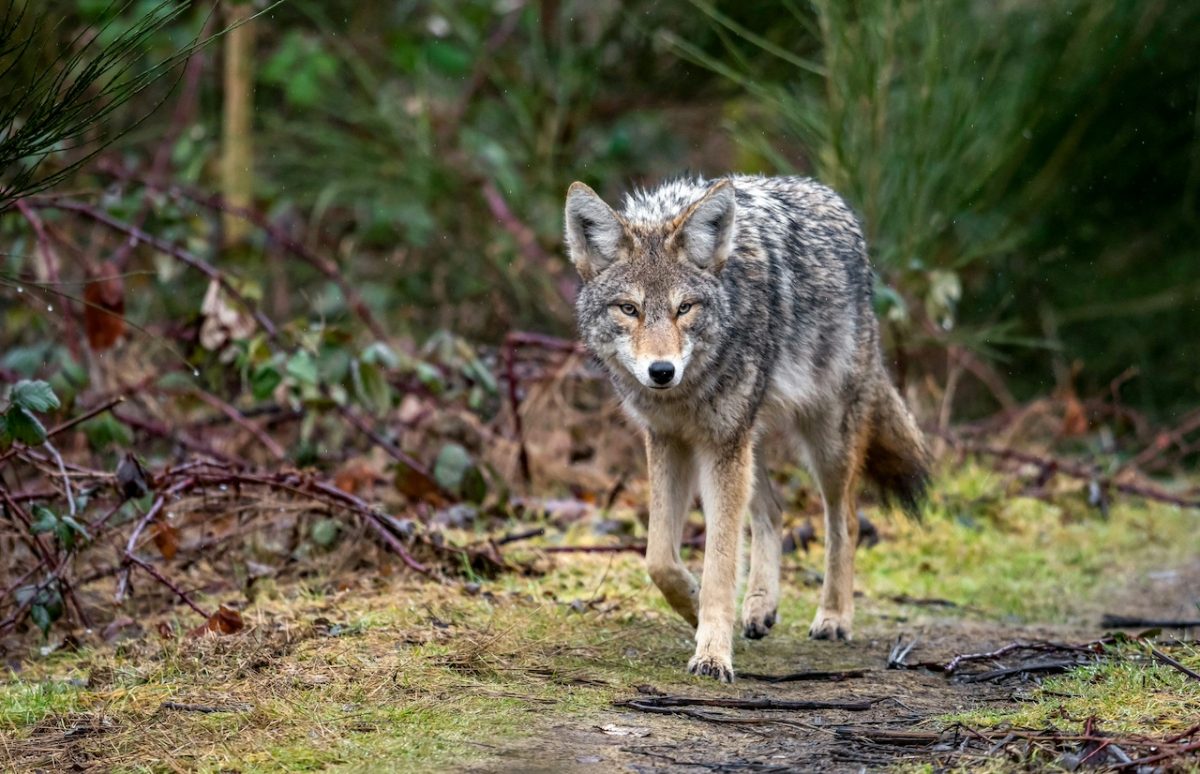
Picture yourself on holiday in a Danish summer cottage, coffee in hand, when a wolf casually strolls past your window. Sounds like the opening of a thriller, right? Well, that scenario is becoming real enough that local tourism authorities have had to issue official guidance on how to behave around these unexpected neighbors.
Denmark is experiencing something remarkable. Wolves vanished from the country in 1813 after being hunted to extinction, but they've been quietly returning since 2012, naturally drifting back across European borders. By 2017, the first proper wolf pack had set up shop in western Jutland. Fast forward to now, and researchers have recorded 49 wolves scattered across Denmark this year, with 10 established territories. Seven of those include pairs with pups born in 2025. The wolf is no longer just a textbook animal here. It's becoming a neighbor.
The trouble started when young wolves began acting like they owned the place. Around the town of Oksbøl in western Jutland, one of Denmark's most popular tourist destinations, local rangers observed something alarming: juvenile wolves approaching people, holiday homes, and domestic dogs with virtually zero hesitation. It wasn't aggressive behavior, exactly. It was worse in some ways. It was familiarity. The animals had simply stopped being afraid.
The municipality of Varde and the local tourism board Visit Vesterhavet didn't panic. Instead, they did something smart. They created and distributed information leaflets at tourist offices, campsites, and holiday homes throughout Oksbøl, Vejers, and Blåvand, available in Danish, English, and German. No drama, no sensationalism. Just practical, calm guidance for what to do if you lock eyes with a wolf on your beach walk.
What You Actually Need to Know
Here's the thing: there have been zero recorded wolf attacks on humans in Denmark. None. Not one incident of a wolf going after a person. The current behavior, according to the Danish Centre for Environment and Energy, does not signal an immediate risk of aggression. That matters. A lot. Yet the guidance is worth understanding, especially if you're staying in one of the cottage communities that dot this coastal region.
If you encounter a wolf, the advice is refreshingly straightforward. Stay still. Maintain eye contact. Sounds simple, and that's because it is. If the animal doesn't retreat, you're encouraged to make yourself bigger and louder. Shout. Clap. Wave your arms. The old predator deterrent playbook. Under no circumstances should you turn your back on an approaching wolf or try to follow one. Children under ten should stick with adults in the Oksbøl area, which is a reasonable precaution that doesn't require you to stay locked indoors.
Peter Sunde, a wildlife ecology professor at Aarhus University, explained the root cause of this unusual behavior. Young wolves that are repeatedly exposed to humans without negative consequences gradually shed their natural wariness. In other words, if wolves grow up seeing people and never getting chased away or harmed, they start treating humans like a normal part of their environment. It's the same reason bears approach campsites and raccoons dig through city trash. Habituation is the technical term. Bad news for keeping wild things wild.
Why This Matters for Your Trip
The scenario unfolding in Denmark is actually a test case for how Europe handles its recovering wolf populations. Denmark is figuring out real-time solutions to prevent young wolves from becoming permanently accustomed to people. The stakes are high for both species. Wolves that lose their fear tend to end up dead. Humans tend to lose patience with predators hanging around their vacation homes.
This is why authorities are asking residents and visitors not to approach wolves or leave out food that might attract them. It's not an appeal to safety theater. It's a genuine effort to preserve the natural instinct that keeps wolves wild and humans safe. Varde's deputy mayor, Sandie Eis Ravn, framed it perfectly when speaking to reporters: "If you are visiting somewhere and you know there is a wolf in the nearby forest, it is important to make sure you have the right code of conduct when you meet this creature."
For travelers planning a visit to western Denmark's cottage communities, beaches, and outdoor attractions, the message is simple. Wolves are here. They're likely staying. Respect their space, follow basic protocols if an encounter happens, and enjoy the knowledge that you're witnessing something genuinely rare in modern Europe. A large predator species making a genuine comeback in human-dominated landscape isn't a threat to your holiday. It's a privilege to witness.