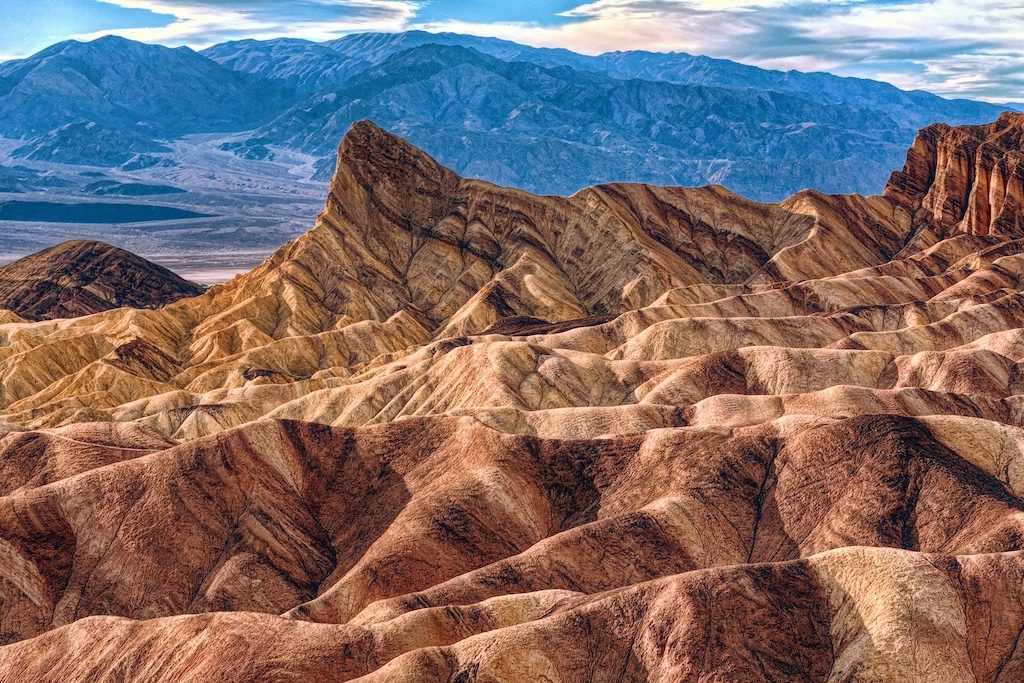
There's a particular magic in learning that deserts are alive. I discovered this as a child, watching pressed flowers arrive in greeting cards from a family friend who'd moved to Death Valley, California. Those delicate specimens taught me something school textbooks never could: that the driest places on Earth are capable of stunning beauty. That lesson stuck, sparking a lifetime of chasing arid landscapes, from Australia's Red Centre to Namibia's Kalahari, always circling back to the pull of Death Valley at sunrise.
In 2026, Death Valley is proving why that pull is so magnetic. The desert is about to put on a show that hasn't happened in ten years. Thanks to a surprisingly generous autumn rainfall in 2025 (yes, 6.1 centimeters counts as generous in the Mojave), wildflower seeds got the moisture they needed to crack through their protective coating. A damper-than-usual winter followed, allowing roots to establish and seedlings to hold onto precious water. Light winds meant buds could actually survive long enough to bloom. All the meteorological pieces aligned.
What You're Actually Going to See
The result is a landscape transformed by color. Desert sunflowers blaze yellow across the valley floor. Grape soda lupine delivers purple in shades that seem invented. Wavyleaf paintbrush contributes orange brushstrokes like someone's been out here with an artist's palette. Desert stars and brown-eyed primroses add whites and speckled accents. It's not random or modest. It's nature's way of showing off.
The U.S. National Park Service is using careful language here, calling it an "above-average bloom year" rather than a "superbloom." That's because the flower count isn't quite matching the legendary displays of 1998, 2005, or 2016. But let's be honest: "above-average" still means the desert will be stunning, and more importantly, it means the pollinators will come. Bees, butterflies, and hummingbirds that might otherwise skip Death Valley will find reason to visit.
When to Make the Trip
Here's the critical part: these flowers don't stick around. The blooms' brief lifespan is actually a survival mechanism, allowing plants to conserve energy and return the following year. At lower elevations near Badwater Basin (where you'll find the densest displays), the peak runs through the end of March. If you're planning a visit later in spring, don't worry. Higher elevations will keep flowering from April through June.
Start planning now. Death Valley is a straight shot into your calendar, and booking early when conditions like this happen means securing the best logistics before crowds arrive. The southern section of the park near Ashford Mills is where you'll find the main event.
One Rule That Actually Matters
Leave the flowers where they are. My mother's friend's tradition of pressing specimens into cards is charming in retrospect, but it's also exactly how we lose these displays. Regulations prohibit picking, and there's a practical reason beyond the rules: left alone, these plants will seed again, and the spectacle returns in another decade or so. Your restraint now means future travelers get their own moment of wonder.
Death Valley waited ten years for this. Pack light, bring water (obviously), watch where you step, and let the desert remind you what it's capable of when the conditions align.