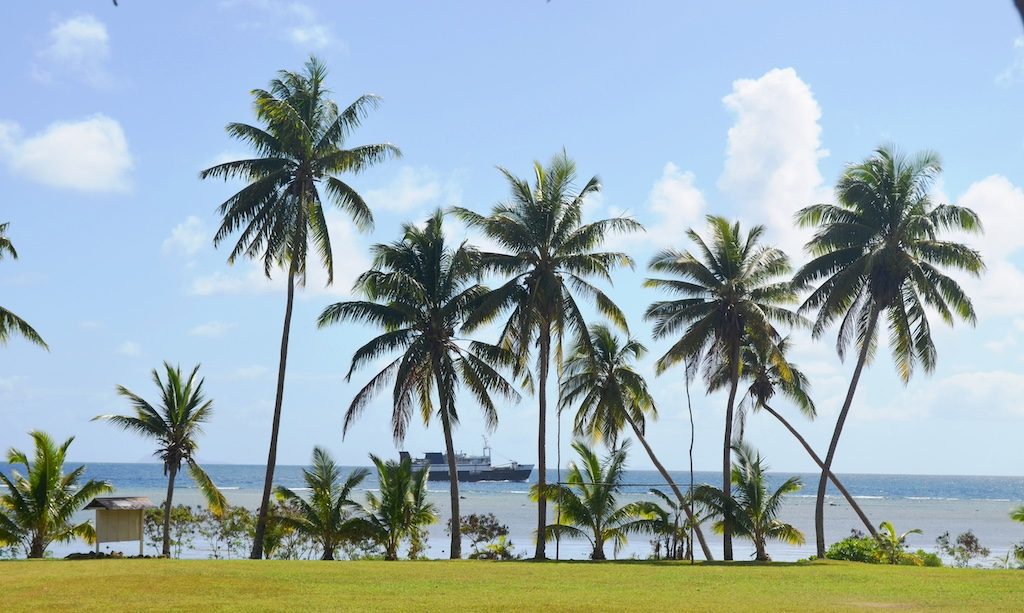
Sometimes the most dramatic travel stories don't involve Hollywood scripts or survival adventures. Sometimes they're just the raw reality of what happens when bad weather meets maritime mishaps. Last April, the MV Fiji Princess learned this lesson the hard way when it ran aground on a reef near Monuriki, the tiny island where Tom Hanks filmed Cast Away back in 1999 and 2000. Unlike Hanks' character who spent four years stranded after a plane crash, the 47 people aboard this vessel faced a far shorter ordeal.
How a Squall Turned Into a Crisis
On the morning of Saturday, April 5, a severe squall rolled through the waters near Nadi, about 45 kilometers west of Fiji's main gateway. The anchor of the Blue Lagoon Cruises ship couldn't hold its position against the violent weather, and the vessel got dragged toward a nearby reef. When it hit, the damage was immediate and serious. The Maritime Safety Authority of Fiji inspected the hull and found severe damage to the rear left side, including the steering equipment compartment. The underwater section of the vessel had also taken a beating, and the engine gave up entirely. Water began seeping into the ship's interior.
What made this grounding particularly worrying wasn't the passengers. The 30 visitors and 17 crew members were evacuated by ferry early the next morning to Denarau Island without incident. What kept authorities and environmentalists up at night was the 20,000 liters of diesel fuel sitting in the ship's tanks.
When an Environmental Threat Becomes Real
A major oil spill in Fiji's coastal waters would have been catastrophic for marine ecosystems and tourism. The rough seas and strong waves made it impossible for divers to safely assess the hull or begin fuel recovery operations immediately. While containment booms and specialized equipment were rushed to the scene, the window for disaster felt wide open. The timing couldn't have been worse either. Fiji was already battling the aftermath of Tropical Cyclone Vaianu, which had closed schools, roads, and prompted a shutdown of maritime operations across the Western Division.
The situation stayed tense until salvage specialists from Australia arrived and successfully extracted the fuel from the damaged tanks. Crisis averted. No environmental damage. The sort of quiet professional heroics that don't make the headlines but absolutely matter to the places we love to visit.
What This Means for Cruising in Fiji
This incident highlights the real vulnerabilities of cruise operations in tropical waters. Fiji's appeal as a cruise destination is precisely because of its remote islands and dramatic coastlines, yet those same features make navigation and emergency response genuinely challenging. The Maritime Safety Authority's response was swift and competent, and the crew's evacuation protocol worked as intended.
For travelers considering cruise vacations in remote regions, this is a reminder that rough weather isn't just an inconvenience. Storm systems in the South Pacific can develop with speed and ferocity. Modern cruise operators take safety seriously, and evacuation procedures exist for exactly these scenarios. The MV Fiji Princess proved that when things go wrong, the systems in place can work.
Monuriki itself remains unchanged, still the haunting tropical stage where cinema history was made. The reef where the ship struck has seen worse. What matters now is that Fiji's waters, its reefs, and its future as a cruise destination avoided a much darker fate. Sometimes the best travel stories are the ones where the ending could have been tragic but wasn't.