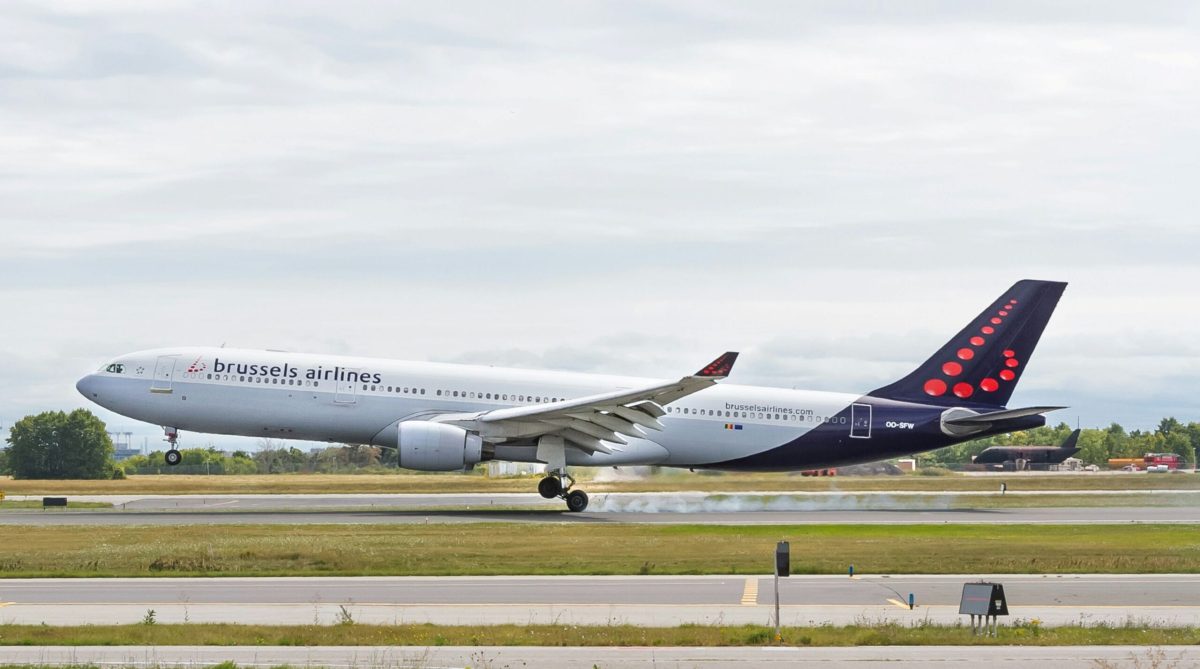
Here's an economic riddle that would baffle most people: an airline adds more flights, welcomes nearly a million extra travelers, and still watches its earnings collapse by half. Welcome to Brussels Airlines' 2025, a year that proved bigger doesn't always mean better.
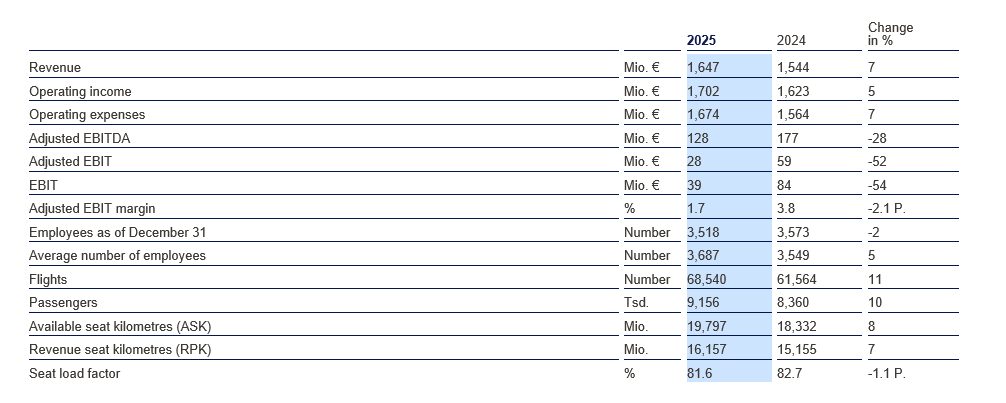
The Belgian carrier expanded aggressively, increasing flight capacity by 11% and operating more than 68,500 flights. Passenger numbers jumped 10% to surpass 9.1 million travelers. Revenue climbed 7% to reach 1.6 billion euros. By every conventional measure of growth, 2025 should have been a success story. Instead, adjusted EBIT (earnings before interest and taxes, the metric that matters most to an airline's health) crashed from 56 million euros in 2024 to just 28 million euros last year.
When chaos costs money
The culprit wasn't demand. The culprit was disruption, and there was plenty of it. Seven strikes hammered operations throughout the year, costing the airline around 15 million euros. These weren't all Brussels Airlines labor actions either. Belgium's airports also endured cyberattacks and drone incursions that temporarily grounded planes and created cascading delays. Geopolitical friction across Europe added roughly 4 euros of cost per passenger.
Then came the mechanical problems. Both scheduled and unscheduled maintenance kept aircraft parked longer than expected, forcing Brussels Airlines to lease expensive long-haul planes as temporary replacements. These band-aid solutions torched profitability. The airline also felt the impact of Middle East tensions, which prompted flight cancellations and route adjustments to the region while crude oil prices climbed.
The margin squeeze
The numbers tell the story. Operating margin dropped from 3.8% in 2024 to 1.7% in 2025. Chief Financial Officer Nina Öwerdieck called it "a clear step back," but the company insists its long-term ambitions remain intact. Brussels Airlines targets an 8% operating margin, the threshold it considers essential for financing new aircraft, service improvements, and stronger regional connectivity.
CEO Dorothea von Boxberg emphasized that the airline remained operational profitable throughout the ordeal, a measure of resilience. She also highlighted that none of the disruptions came from Brussels Airlines' own workforce. Staff went above and beyond during the chaos, according to von Boxberg, taking care of passengers despite external forces beyond anyone's control.
Plans to fix what broke
Recovery hinges on stabilization. Chief Operating Officer Filip Aerts confirmed that measures are already rolling out to reduce delays and cancellations. The airline is also investing in passenger experience upgrades, including cabin service improvements across different travel classes and a renovation of the Brussels Airlines lounge at Brussels Airport.
A 2026 rebound seems possible in theory. The airline hopes to exceed 2024 results and resume its march toward that 8% margin target. But reality could derail these plans. Middle East instability continues to simmer, and Belgium's three major trade unions have scheduled a nationwide strike for March 12, 2026 over pension reforms and wage indexation. No departing flights are expected from either Brussels Airport or Charleroi that day.
For travelers planning European trips, the lesson is clear: growth in seats doesn't guarantee smooth skies. Brussels Airlines is expanding, adding capacity, and serving more passengers than ever. Just don't assume smooth sailing. The airline's 2025 results prove that even aggressive expansion can stumble when external shocks pile on. If you're booking through Brussels, build in buffer time and stay flexible.