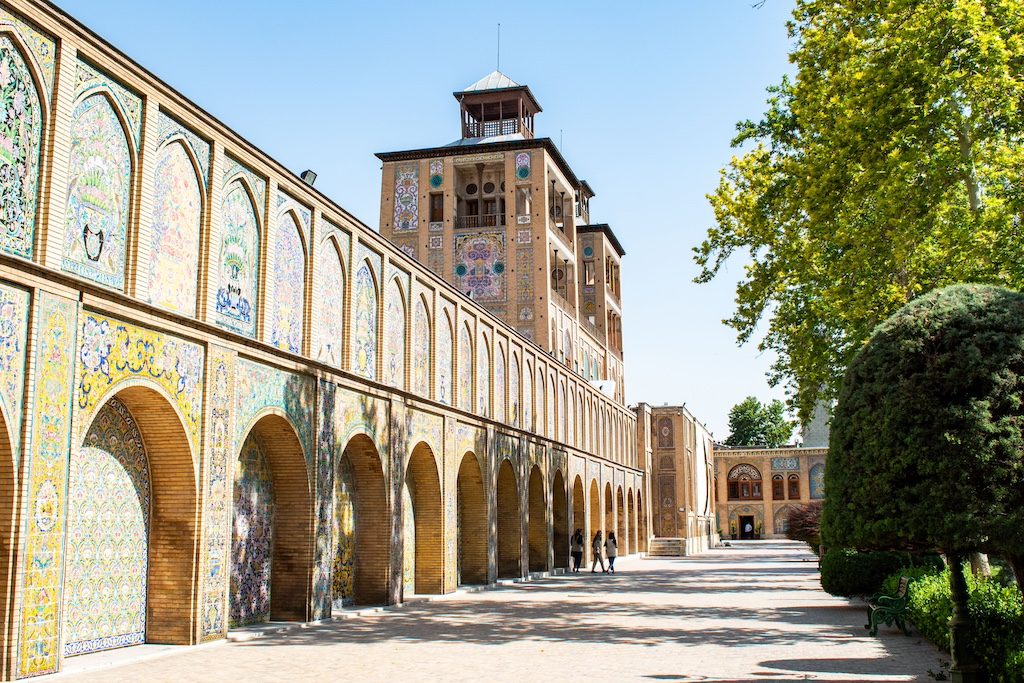
The sound of conflict has reached one of the Middle East's most treasured addresses. Golestan Palace, the glittering heart of Tehran's historic quarter, bore the brunt of recent military strikes. Windows shattered, intricate woodwork splintered, and precious glass fretwork cracked from the sheer force of the blasts. The shock waves were so violent they actually lifted the tarmac surrounding this 400-year-old complex.
This isn't just another building. Golestan Palace stands as Tehran's sole UNESCO World Heritage site, a sprawling compound of 17 structures that once served as the court of Persian shahs and later became the power seat of the Qajar dynasty for over a century. The palace layers Persian design vocabulary with European architectural flourishes, creating something genuinely unique. Ornate mirror work catches light across chambers where coronations once took place. Elaborate chandeliers hang above halls that witnessed pivotal moments in Iranian history. Three major archives, holding irreplaceable photographs and manuscripts, sit within its walls.
Fortunately, curators had already moved the most priceless artifacts to secure locations. Ahmad Alavi, who chairs Tehran's tourism committee, confirmed that precious items had been evacuated before the strikes. But as he surveyed the damage, he confirmed that structural harm couldn't be prevented. The palace's windows, decorated wood panels, and glass elements all suffered significant loss.
The destruction extends beyond one palace. Local news outlets documented harm to other Istanbul treasures, including the historic Arg Mosque and the Grand Bazaar. Iran's Minister of Cultural Heritage, Tourism, and Handicrafts, Reza Salehi-Amiri, visited the palace to assess the extent of the damage and openly condemned it as a violation of international law.
A Region's History Under Threat
UNESCO and UN Secretary-General António Guterres have both issued formal statements opposing the escalating violence. The organization reminded all parties that military operations must respect international law, particularly the 1954 Hague Convention protecting cultural property during armed conflict.
The danger doesn't stop at Golestan Palace. More than 800 museums operate across Iran, and 29 additional UNESCO World Heritage sites dot the country. Beyond Iran's borders, sites of extraordinary importance face similar risks. The ancient Bronze Age ruins at Al Ain in the United Arab Emirates, the carved Nabataean city of Hegra in Saudi Arabia, and the 19th-century coral architecture of Historic Jeddah all sit within or near the conflict zone. These destinations represent irreplaceable chapters of human civilization, each one impossible to rebuild if lost.
Racing to Preserve What Remains
UNESCO has taken action by sending precise geographical coordinates of every major heritage site to the involved nations, hoping to prevent future strikes. A full damage assessment for Golestan Palace is underway, but the palace and its invaluable contents won't be accessible to tourists for the foreseeable future. The organization continues monitoring the wider region's cultural assets, preparing recovery plans should more sites suffer harm.
For travelers planning future trips to Iran and neighboring countries, the reality is sobering. Some of the world's most remarkable historical destinations now face an uncertain future. If you've long dreamed of walking through Persian palaces or exploring ancient Nabataean cities, the window to experience them in their current form may be narrowing.