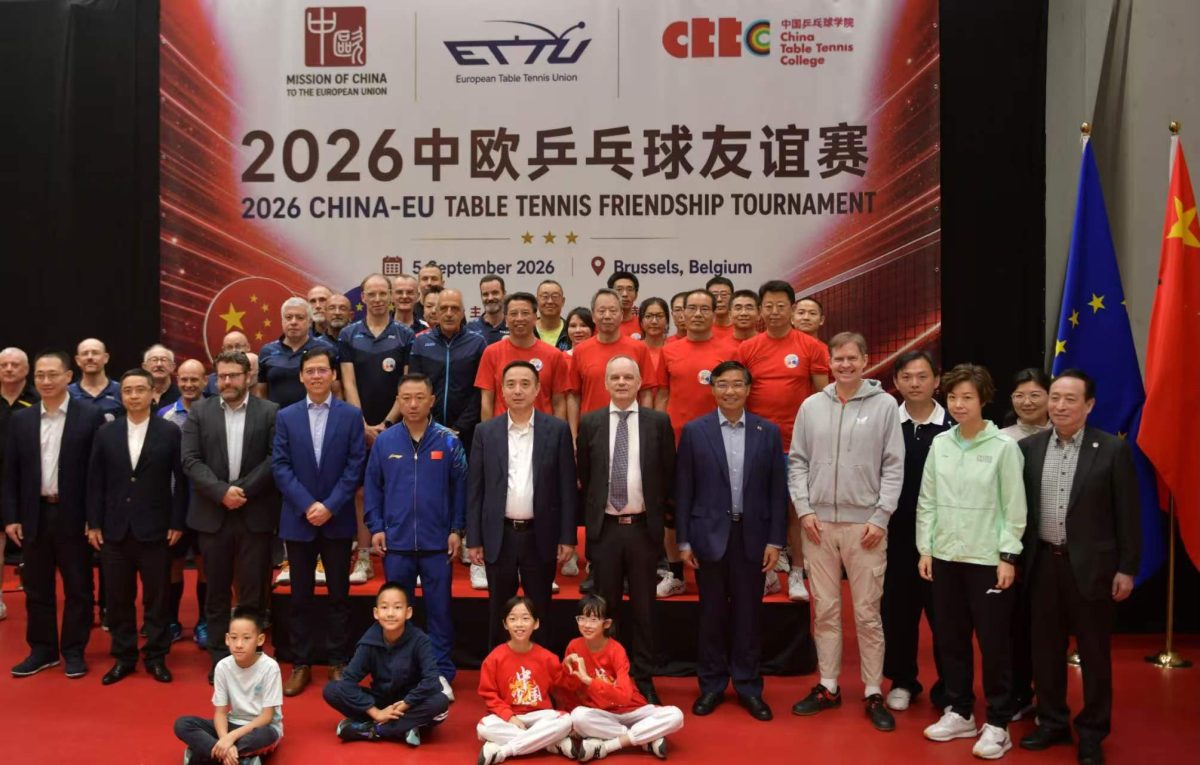
On September 5, 2026, more than 100 table tennis enthusiasts descended on Brussels for an event that had little to do with winning and everything to do with connection. The China-EU Table Tennis Friendship Tournament brought together players from China and European institutions for what organisers billed as a showcase of "ping-pong diplomacy" in action. But unlike the Cold War era exchanges that gave the term its name, this competition had a twist: Chinese and European players weren't rivals. They were teammates.
When Sport Becomes Conversation
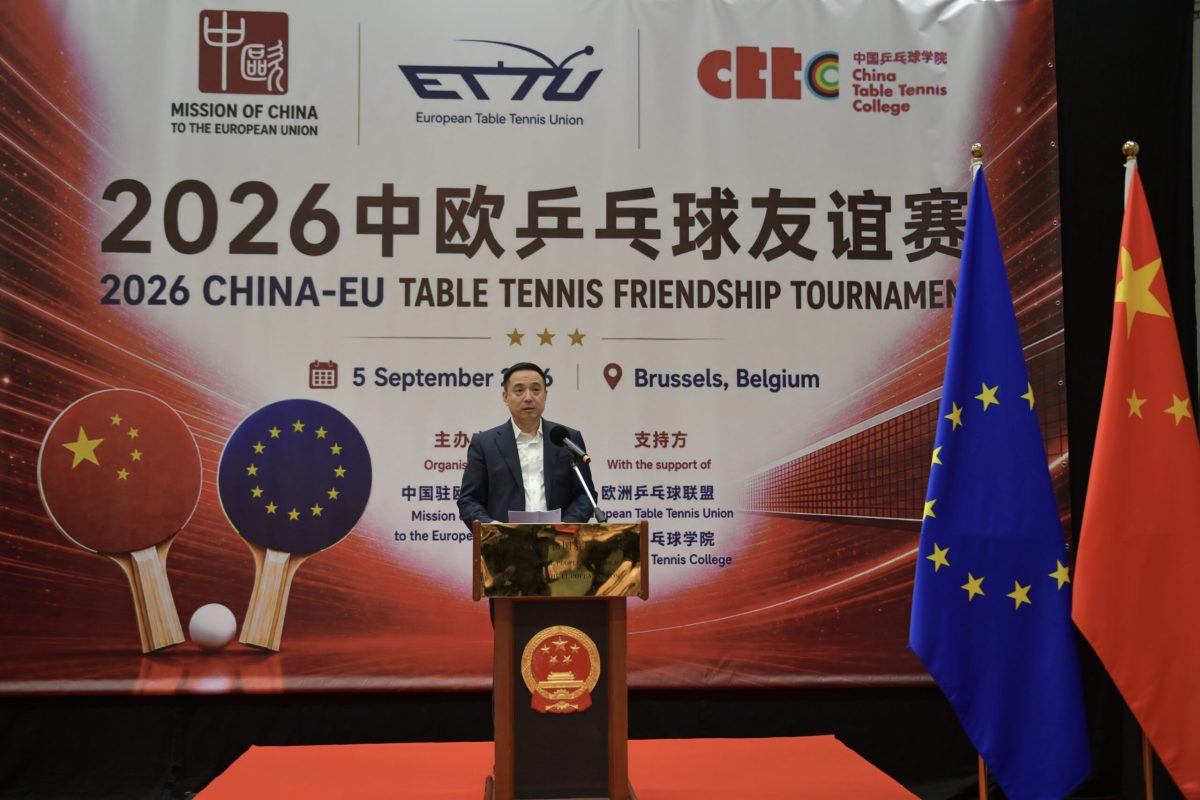
The tournament was jointly organised by China's Mission to the European Union and Euroclub, backed by the European Table Tennis Union and China's Table Tennis College. Ambassador Cai Run, heading China's delegation to the EU, and Didier Leroy, Vice President of the European Table Tennis Union, watched as Fei Shengchao, China's Ambassador to Belgium, opened the competition with a ceremonial serve.
Two legendary figures from Chinese table tennis also made the journey to Brussels. Yan Sen, a former world champion and vice president of the China Table Tennis College, and Zhang Yining, another world champion turned coach, guided participants through the tournament. Their presence underscored how seriously organisers took the event as a symbol of cross-cultural respect.
Ambassador Cai didn't shy away from the bigger picture in his remarks to participants. He argued that cultural and sporting exchanges matter most during times of uncertainty, especially when two major powers like China and the EU are navigating complex trade, investment, and geopolitical waters. Stronger table tennis ties, he suggested, could translate into stronger mutual understanding at the policy level. Leroy echoed the sentiment, framing sports as a pathway for nations to move beyond disagreements and find common ground.
Cooperation Over Competition
What made this tournament different was its fundamental structure. Rather than dividing players into Chinese versus European squads, organisers deliberately mixed the teams. Singles matches and doubles play featured Chinese and European competitors sharing the same side of the net. This wasn't accidental. The format placed cooperation at the heart of competition, creating moments where players trained together, celebrated points together, and cheered for one another.
The atmosphere was warm and collaborative according to reports from the event. Spectators watched as traditional competitive boundaries dissolved into shared purpose. For travellers interested in how cities host international events, Brussels continues to position itself as a venue for bringing different cultures into dialogue, whether over diplomatic sport or other cultural pursuits.
A Legacy Beyond the Game
The term "ping-pong diplomacy" itself carries weight. In the early 1970s, table tennis exchanges between American and Chinese players helped crack open diplomatic channels at a time when the two nations had no formal relations. That breakthrough showed how sport could accomplish what formal negotiations alone could not. Brussels' 2026 tournament drew from that same playbook, though in a markedly different context.
China and the EU face genuine tensions around trade, industrial policy, and geopolitics. Yet both sides also recognise the value of maintaining dialogue and people-to-people connections. The tournament served as a low-stakes, high-visibility way to demonstrate that commitment. It sent a message: whatever divides us economically or politically, we can still gather, compete fairly, and enjoy each other's company.
For anyone curious about how international cities use events to foster understanding, Brussels' table tennis tournament offers a compelling case study. The match scores that day matter far less than the conversation it sparked about what friendship between major global powers could look like when both sides show up in good faith.