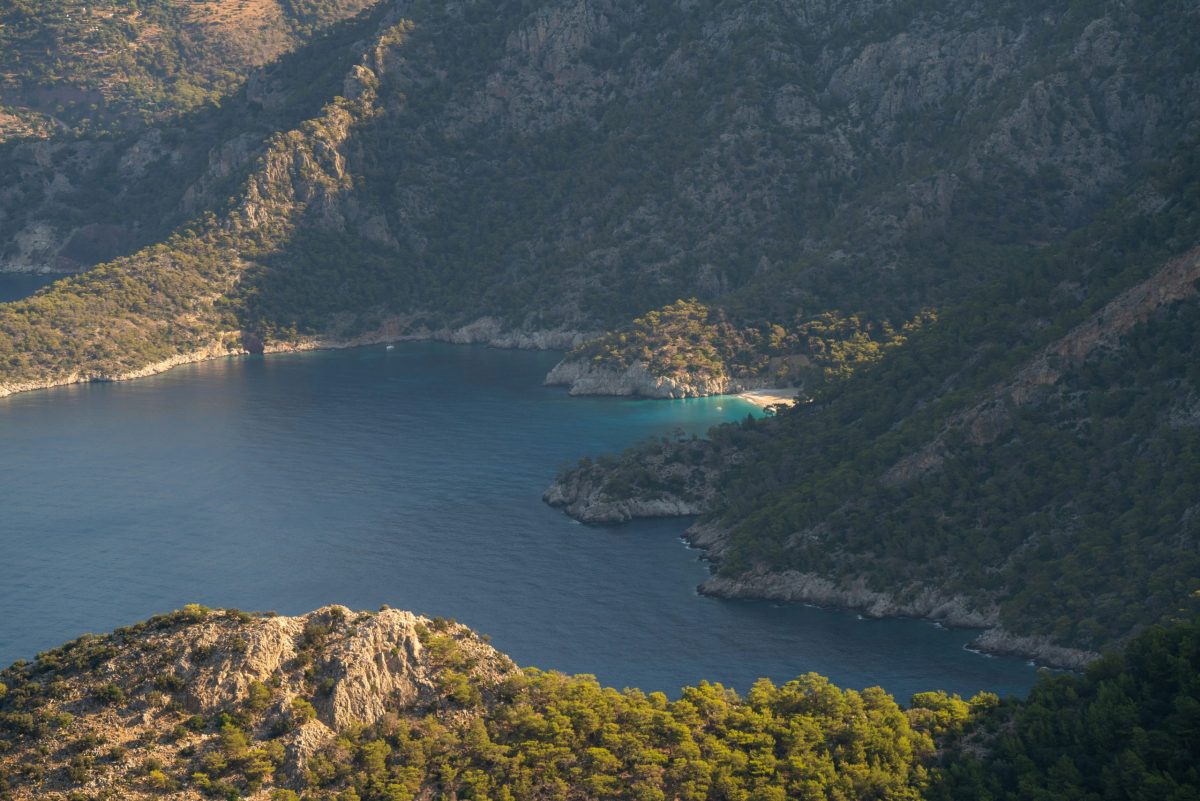
The ocean has always been the quiet engine of travel. Every year, millions of people flock to coastlines for sun, sand, and sea, and the money they spend keeps entire regions afloat. But that engine is sputtering. Rising seas, warming waters, and eroding shores are putting both the destinations and the livelihoods they support at risk. Now, a new coalition is stepping in to change the way coastal tourism operates.
At the COP31 climate conference in Antalya, Türkiye, the World Travel & Tourism Council (WTTC), along with Iberostar Group, Intrepid Travel, and the Ocean & Climate Platform, launched the Ocean Catalyst Group (OCG). The group's mission is straightforward: put coastal tourism and marine protection squarely on the global climate agenda. It is a recognition that the industry cannot keep taking from the ocean without giving back.
The stakes are enormous. Coastal and marine tourism contributed €3 trillion to global GDP in 2023 and supported 100 million jobs. That is not a niche market. It is a cornerstone of the global economy, and it depends entirely on healthy marine ecosystems, reliable energy, and clean water. Without those, the whole house of cards collapses.
The OCG's first move was to release a practical guide called the Coastal & Marine Tourism Public-Private Sector Playbook. It offers businesses and governments concrete advice on renewable energy, cleaner transport, and climate-resilient infrastructure. This is not another lofty declaration. It is a tool meant to be used on the ground, in the places where decisions are made.
The group is also backing the Coastal Tourism Breakthrough, an initiative under the UN Climate Change High-Level Champions that aims to mobilize €27.3 billion in annual investment by 2030. That money would go toward reducing emissions, protecting marine ecosystems, and building resilience in coastal communities. The challenge is turning that ambition into actual projects that benefit everyone, from resort owners to local fishers.
One example already in motion is the Changuu-Bawe Marine Conservation Area in Zanzibar, created through a partnership between the government and a luxury resort operator. The goal is to protect coral reefs while supporting local livelihoods. It is a small-scale model of what the OCG hopes to replicate on a global scale.
The conversation around sustainable tourism is shifting. At a recent forum in Brussels, industry leaders argued that green travel cannot stop at the hotel gate. It has to include transport, infrastructure, and the surrounding community. That idea is now gaining traction, and the Brussels summit made it clear that the real work lies beyond the property line.
The OCG is a voluntary working group, which means it will rely on cooperation rather than regulation. Its first task is to identify shared priorities, build partnerships, and attract investment to coastal destinations. Members will pick and choose which initiatives to join based on their own strengths and interests. That flexibility could be its greatest asset, or its biggest weakness, depending on how seriously the industry takes it.
For travelers, this matters more than it might seem. The beaches you visit, the coral reefs you snorkel, the coastal towns you wander through, they are all part of a fragile system. Healthy oceans are not a luxury, they are the foundation of the entire coastal travel experience. The OCG is betting that the industry will finally start treating them that way.
Whether this initiative delivers real change or becomes another talking shop remains to be seen. But the fact that tourism leaders are now talking about marine protection in the same breath as business strategy is a shift worth watching. The ocean has been giving to travel for decades. It is about time the industry started giving back.