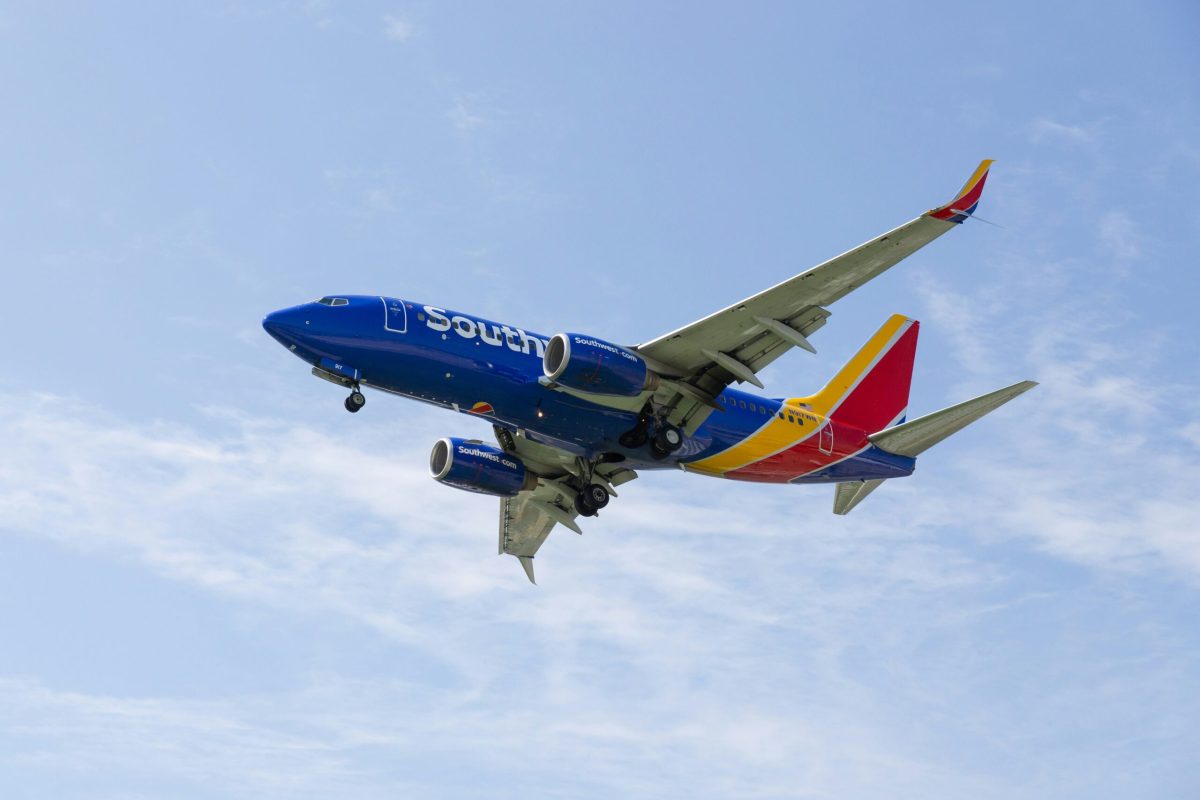
Traveling can feel unpredictable enough without worrying whether a gate agent will deem your body acceptable for flight. That's the reality Ruby Cosby from Nashville faced on February 28 when she arrived to board a Southwest flight to Los Angeles.
Cosby had flown with Southwest before without incident. But this time, a gate agent told her she couldn't board unless she purchased a second seat, citing the airline's recently introduced "customer of size" policy. When she asked to simply demonstrate that she could fit between the armrests, she was denied the chance. The agent worried that if she couldn't fit once past security, it would create "a bigger problem." Rather than buy an extra $450 ticket on the spot, Cosby watched her reservation get cancelled.
She eventually scraped together funds to rebook, but hit another roadblock when a second agent initially waved her through before the first agent intervened again. Exhausted and frustrated, Cosby booked a flight with a different carrier for $350 instead. The whole ordeal exposed something Southwest didn't advertise loudly enough: their policy shift on January 27, 2026, changed the rules for plus-size travelers in ways that feel less like logistics and more like gatekeeping.
The Policy Nobody Asked For
Here's what changed. Previously, Southwest allowed passengers to request an extra seat at no cost, or they'd refund purchases made in advance if the second seat went unused. That system wasn't perfect, but it offered flexibility and dignity. The new approach flips the script. Now, if you don't fit neatly between the armrests (the sole measure), you must buy another ticket. No refund guarantees. No clear guidelines. Just the discretion of whoever happens to be working the gate that day.
The problem is obvious: discretion without definition invites bias. What looks "too large" to one agent might not to another. There's no objective standard, no measuring tool, no consistent application. Just perception. And perception, as any traveler who's been profiled knows, gets murky fast. Passengers across social media have reported feeling singled out, embarrassed, and anxious about flying. Some describe the experience as a "fat tax" that punishes bodies that don't fit airline-defined proportions.
Southwest's statement to media outlets emphasizes their goal of comfort and safety, noting that "with assigned seating, adjacent seats may sometimes already be occupied." But that explanation doesn't address the core grievance: why is the burden placed entirely on the passenger to prove they fit, with no objective criteria and no right to demonstrate their case?
What This Means for Your Next Flight
If you're planning a Southwest trip, know what you're walking into. The airline has given gate agents sweeping power to make judgment calls about your body in real time. You won't know the decision until you show up. You can't appeal it rationally because there are no measurable standards. And if an agent says no, your only options are to buy another ticket, miss your flight, or choose a different airline.
This kind of inconsistency doesn't happen by accident. It's baked into the policy. Southwest says they'll "reach out" to affected customers and apply "appropriate discretion," but that language actually highlights the problem. Discretion works fine for edge cases. It's a disaster for a blanket policy that affects thousands of passengers.
The airline industry has always walked a fine line between comfort and profit. Like how airlines manage seat assignments and upgrades, seating policies reveal deeper choices about who airlines serve and how. But this policy doesn't feel like a thoughtful balance. It feels like passing the responsibility for a systemic decision down to individual workers, setting them up to make judgment calls in high-pressure situations.
Cosby's warning rings clear: without objective standards, enforcement becomes whatever an agent decides on any given morning. That's not a policy. That's a gamble. And nobody should have to gamble with their right to travel. If you're considering Southwest for an upcoming trip, read between the lines of their new seating policy. And maybe have a backup airline picked out, just in case.