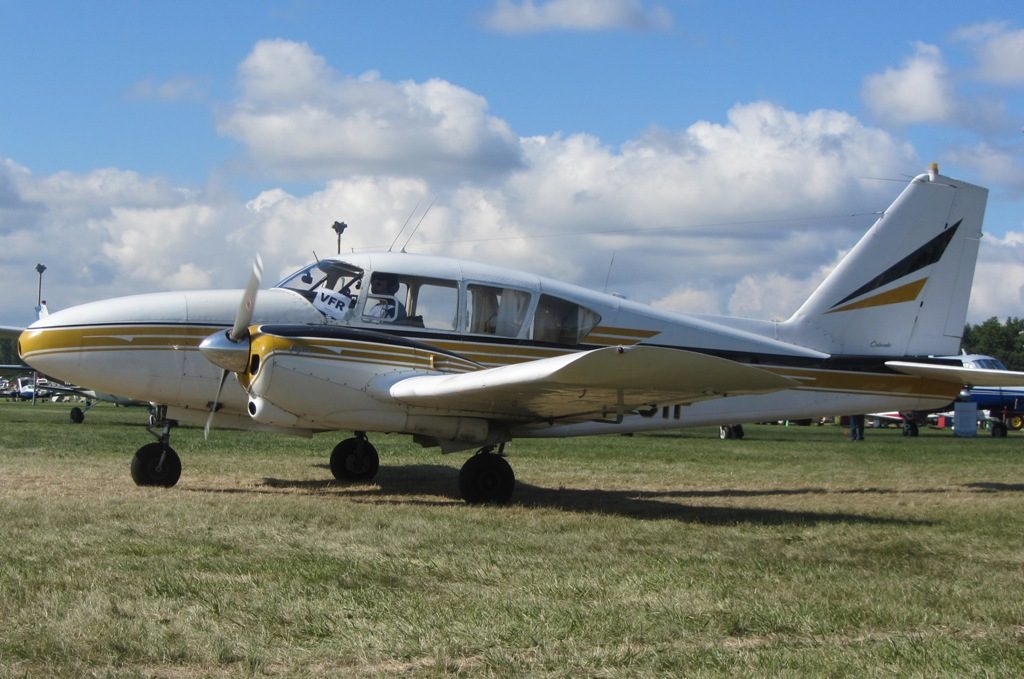
Picture this: you could own a piece of aviation history for the cost of a coffee. Seville Airport is about to auction off a vintage Piper PA-23 Apache, a four-passenger aircraft from the 1950s, with opening bids starting at just €10. Yes, really.
The Apache has sat abandoned on the Spanish tarmac since 2018, making it a prime candidate for what European aviation law calls the "lengthy owner-location process." Airport officials at Seville tried contacting the plane's owner repeatedly over those eight years, with zero success. They even published notices in Spain's Official State Gazette three separate times, hoping someone would step forward to claim their forgotten aircraft. Nobody did.
Why an airport would give away a plane
Storage isn't free, and abandoned aircraft represent dead weight both literally and financially. Like many airports grappling with overcrowded tarmacs, Seville needs the space. The Spanish airport authority AENA has officially declared the Apache abandoned, clearing the way for the auction to proceed. A spokesperson confirmed they'd exhausted every reasonable avenue: "We have tried to contact the owner many times. Since we didn't manage to reach anyone, the airport announced the situation of this aircraft three times in the Official State Gazette."
The PA-23 Apache itself has serious historical credentials. Built by Piper, one of aviation's "Big Three" manufacturers alongside Cessna and Beechcraft, nearly 7,000 of these aircraft rolled off production lines between 1952 and 1981. They were among the first twin-engined planes designed for civilian tourism, making them genuinely collectible.
The reality check for bargain hunters
Before you start drafting your bid, here's the sobering part: the plane is in rough shape. AENA describes it as being in "bad condition" and has explicitly stated it "cannot fly." This isn't a project for weekend tinkerers. Prospective buyers are looking at potentially substantial repair costs, plus the logistical nightmare of transporting a non-functional aircraft from Spain to wherever they happen to be.
Still, interest has been genuine. AENA reports receiving multiple inquiries from aviation enthusiasts, collectors hunting for memorabilia, and yes, a few dreamers who see restoration as an interesting real estate venture. The combination of rarity, rock-bottom entry price, and the romance of salvage appears to outweigh the practical obstacles for some.
Seville isn't alone in this problem
Abandoned aircraft have become an international headache for airport authorities. Kenya Airports Authority has held mass auctions at its major hubs to recoup storage costs. The problem reaches its most extreme form in the Arizona desert, where Davis-Monthan Air Force Base houses the Aerospace Maintenance and Regeneration Group (AMARG), essentially the world's largest aircraft graveyard. Sprawling across 10.5 square kilometers, it holds over 4,000 planes in various states of decomposition, their parts stripped and sold as the aviation equivalent of recycling.
What makes Seville's auction different is the almost theatrical lowball starting price. Ten euros feels less like a genuine business transaction and more like the airport saying "please, just take this thing." For collectors, it's a rare opening to acquire a slice of mid-century aviation history, even if that slice requires serious restoration work.
The bidding opens soon, and somewhere out there, someone is probably already clearing space in their hangar.