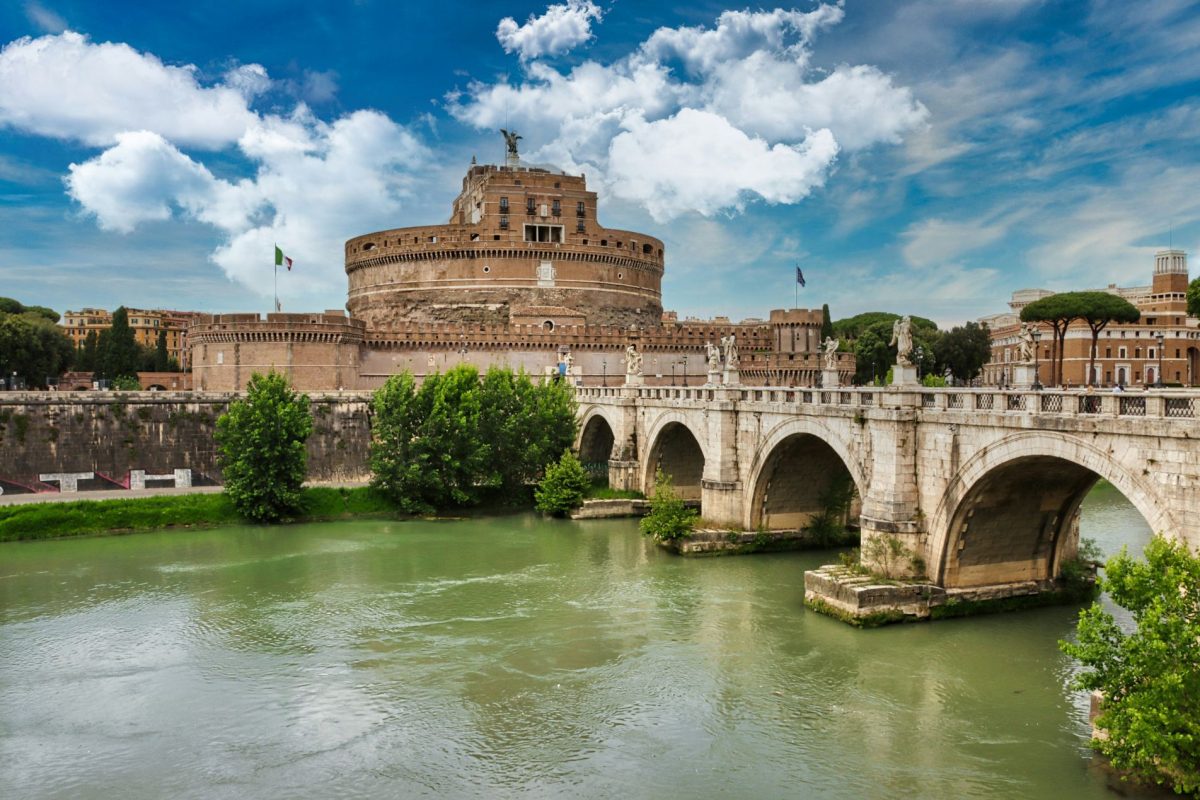
The Tiber River is revealing more than just murky water these days. As one of Europe's worst droughts in recent memory drops the river's flow to barely half its normal rate, an ancient structure has emerged from the depths near Vatican City: the remains of a 2,000-year-old Roman bridge that most travelers never get to see.
The stones are enormous and starkly visible from Ponte Sant'Angelo, the medieval bridge that still carries pedestrians across the river today. Tourist boats still glide past the exposed ruins, but nobody knows how long this archaeological gift will last. Water levels shift quickly, and Rome's water crisis could reverse just as suddenly as it arrived.
The Bridge Nobody Really Agrees On
Here's where things get murky, and not just because of the river. Everyone calls this the Bridge of Nero, the emperor famous for allegedly fiddling while Rome burned. The problem? He probably didn't build it. Archaeologists, including Antonella Bonini from Rome's cultural heritage superintendence, think his uncle, Emperor Caligula, ordered the construction around 39 AD, roughly 15 years before Nero even took power. So the famous name is essentially a historical accident that stuck around.
The bridge appears to have served a specific purpose in Caligula's world. It connected the Campus Martius area on one side of the Tiber with what would eventually become Vatican City. More importantly, it provided access to a villa belonging to Agrippina the Elder, Caligula's mother, and ran near a circus associated with both emperors. That connection to Nero's circus, which once occupied the land beneath St. Peter's Basilica, eventually overshadowed the bridge's true origins.
A Route to Sacred Ground
This wasn't just any crossing. The bridge formed a crucial link between the heart of Rome and a district that would become one of Christianity's most sacred sites. Christian tradition places Saint Peter's martyrdom in this area during Nero's reign, meaning this ancient stone structure was part of the landscape where foundational Christian history unfolded. By the third or fourth century, though, the bridge had fallen into disuse and disappeared from Roman records entirely. A newer crossing, the Pons Aelius (today's Ponte Sant'Angelo), built by Emperor Hadrian, took its place and still stands.
When a River Tells Stories It Shouldn't
The reason you can see this bridge at all speaks to a much larger problem gripping Italy. The Tiber's flow has plummeted to less than 80 cubic meters per second, according to Giovanni Giganti, Rome's civil protection coordinator for water management. That's less than half the historical average of 150 cubic meters per second. The culprits are relentless heat, missing rain throughout the summer, and sparse snowfall in the Apennine Mountains that normally feeds the river during warmer months.
Rome had a wet winter last year, but subsequent dry spells wiped out those gains quickly. This isn't simply a scenic mishap for photographers and archaeologists. The exposed riverbed has also revealed what modern life dumps into the Tiber: e-bikes, scooters, refrigerators, and even a car have surfaced alongside the Roman stones. It's a stark and uncomfortable contrast. While scholars get a rare chance to examine a piece of the city's ancient past, that same exposing reveals the relentless pressure and neglect the river faces today.
If you're planning a trip to Rome, the exposed bridge is a genuine piece of luck right now, though hardly a guarantee. Water levels in rivers fluctuate unpredictably. You might see the stones clearly or catch only glimpses, depending on when you visit. Either way, standing at Ponte Sant'Angelo and looking toward the submerged ruins connects you to two thousand years of history in a way most visitors never experience. Just remember: you're witnessing something that should technically stay hidden, revealed only when nature itself decides to shift the rules.