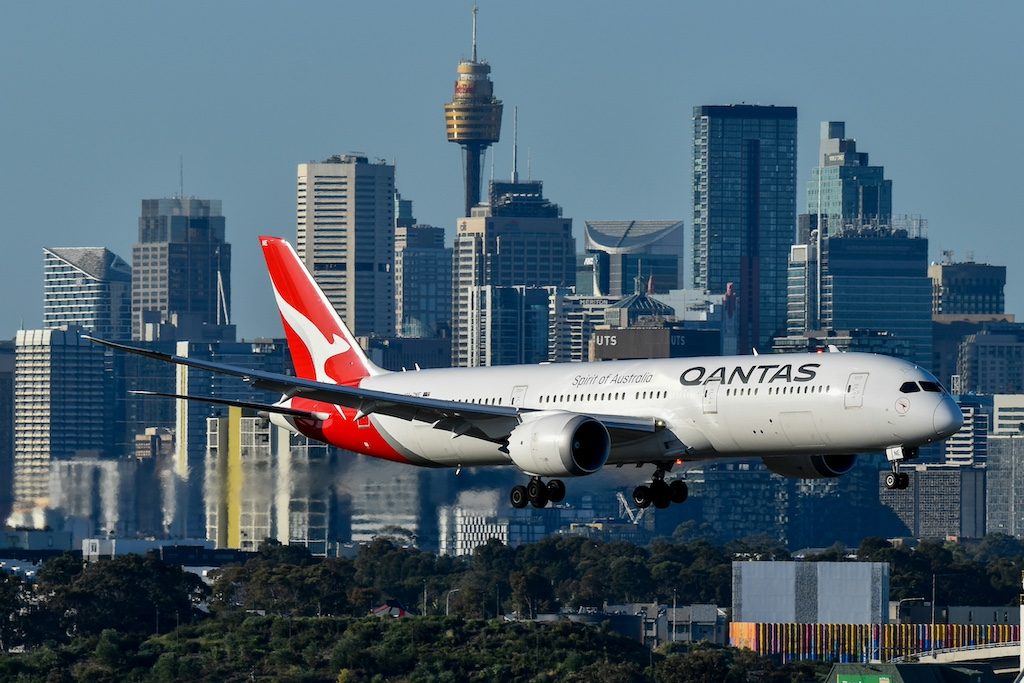
Qantas is shaking up its corporate backbone. On Tuesday, the airline confirmed it will outsource 850 roles to consulting giant Accenture, with most of the work shifting to teams in India. The multi-year deal is designed to overhaul the airline's "back-end systems, processes and data" while ramping up investment in technology and artificial intelligence, according to the Guardian.
The first changes are expected by mid-2027, touching finance, procurement, people, and marketing departments. CEO Vanessa Hudson didn't sugarcoat the news in an internal email reported by the BBC. "This is hard news for some and I'm sorry for the uncertainty it brings," she told employees. She also explained the driving force behind the tech push: Qantas spends more than AU$1 billion (around €613 million) a year on technology and runs over a thousand legacy applications "that were never designed to work together." Affected staff will be redeployed "where possible," including into new Australian roles, the company said.
Unions aren't buying it. The Australian Services Union is demanding answers, pointing out that Qantas previously promised it had no plans to send jobs overseas. Assistant national secretary Scott Cowen told the Guardian: "Sending more jobs overseas is not in the spirit of Australia."
For context, Qantas employs about 32,000 people, with roughly 28,000 based in Australia, according to the BBC. This marks the third major corporate restructuring in Australia in three weeks, following NAB (2,500 roles) and Canva (1,200). Add Qantas, and that's around 4,550 corporate jobs affected in a single month. The airline is also grappling with higher jet fuel costs and said it would keep adjusting fares and capacity, though it described customer demand as resilient.
So why India? ABC reports that many large Australian companies, including Qantas, NAB, Westpac, Telstra, and Coles, have been moving roles to Asia, often through so-called global capacity centres (GCCs). These are overseas offices a company owns outright, rather than contracting a third party. "In very simple terms, a GCC is setting up another office for a company," said Lalit Ahuja, chief executive of ANSR, a firm that helps businesses establish them. India hosts about half of the world's GCCs, and economist Arya Roy Bardhan told the ABC that wages there average about a third of Australian levels. In this case, it's thought Accenture's India-based teams will take much of the work.
What does this mean for travelers? Nothing in the announcements suggests changes to cabin service, since the roles in question sit in corporate functions. But the airline's ambitions for automation and AI are clear, and the Finance Sector Union has already described similar moves across the sector as "callous." With consultations between unions and staff still to come, expect this story to run for some time.
For now, Qantas continues to expand its network, including the long-awaited nonstop Sydney to New York flights. And if you're planning a trip Down Under, keep an eye on how this restructuring unfolds, especially if you're a frequent flyer. The airline's Pacific power play in Auckland and other route changes could be affected by the tech overhaul. Meanwhile, Australia's new visa crackdown might also impact your travel plans, so stay informed.
As Qantas navigates this transition, the big question is whether the tech investment will pay off in smoother operations and better customer experiences. The first changes arrive by mid-2027, and 850 corporate roles are moving to India. For now, cabin service remains unaffected, but the airline's future is clearly digital.