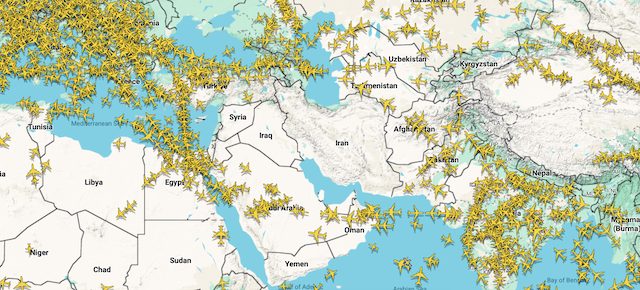
What was supposed to be a routine Tuesday morning turned into travel chaos across the Middle East. Following military strikes and retaliatory attacks, airspace closures cascaded through the region like dominoes, grounding flights and stranding passengers in ways few airports have experienced. The ripple effects are still unfolding, with no clear end date in sight.
The Scale of Disruption
The numbers tell a sobering story. Over 3,400 flights were cancelled in a single day across seven major Middle Eastern airports, including Dubai, Doha, Abu Dhabi, Sharjah, Kuwait City, Manama, and Al Maktoum International. Flight-tracking services reported more than 1,800 cancellations on Saturday alone, with another 716 on Sunday. By Monday, global delays had surged past 19,000 as airspace restrictions tightened across the Gulf.
The impact on the region's biggest carriers is staggering. Emirates, Qatar Airways, and Etihad collectively move roughly 90,000 transit passengers daily. These three airlines alone represent the lifeblood of Middle Eastern aviation, connecting Europe, Asia, and Africa. When they ground flights, the consequences ripple across the entire global flight network.
Which Airports Are Actually Closed
Iran has officially closed its airspace until at least March 3rd. Qatar announced temporary suspension of all air traffic as a precautionary measure, forcing Qatar Airways to halt operations to and from Doha entirely. More than 2,000 additional flights to and from key Gulf airports were cancelled as restrictions expanded daily.
Dubai International, one of the world's busiest transit hubs, faced an indefinite suspension of operations after being directly impacted by missile strikes. The chaos was immediate and overwhelming. One stranded passenger described the scene inside the terminal: "Just imagine 100 flights getting off at once. It's hundreds of people. I've never seen the airport like it." Ben Gurion Airport in Tel Aviv will remain closed until at least March 3rd, with Israir cancelling all international and domestic services through Monday morning.
What Passengers Are Experiencing Right Now
Travelers caught in the crosshairs are being relocated by bus to hotels outside city centers, which is both practical and unsettling. One passenger posted that their temporary accommodation was orderly, spacious, with families distributed across a large hotel and plenty of food. Yet morale is understandably strained. Most travelers just want to know when they can actually fly home.
Syrian airspace partially closed its southern corridors for 12 hours. Jordan's air force took steps to restrict certain operations over its territory, citing security concerns and the need to prevent unauthorized airspace incursions. These secondary closures expanded the affected zone far beyond the initial conflict region.
International Airlines Are Pulling Out
European and Asian carriers have responded aggressively to the situation. Swiss International and Lufthansa suspended all flights to Tel Aviv, Beirut, Amman, Erbil, and Tehran through March 7th, with Lufthansa also grounding Dubai and Abu Dhabi routes. Air France-KLM cancelled services to Tel Aviv and Beirut before expanding cancellations to Dubai and Riyadh. British Airways suspended operations to multiple regional destinations, reiterating that safety remains non-negotiable.
Turkish Airlines halted flights to ten Middle Eastern countries outright. Air India suspended all regional operations. Russia's aviation authority grounded commercial flights to Iran and Israel indefinitely. All Kazakh airlines suspended Middle East flights through March 3rd. This coordinated pullback from global carriers signals that airlines view the situation as unpredictable and ongoing, not a brief disruption.
What This Means for Your Travel Plans
If you have upcoming flights to or through the Middle East, contact your airline immediately rather than waiting for cancellations. Airlines are gradually issuing rebooking options and additional passenger rights for those affected. Travel advisories have been heightened across the entire region, and major hubs are expected to remain restricted well into the week.
Government officials have signalled that military tensions could persist, adding uncertainty about when normal flight operations will resume. This isn't a single-day disruption. Anyone planning regional travel should assume these restrictions will remain in place for at least several more days, and should prepare accordingly with flexible booking options and realistic expectations.