The skies over the Middle East have essentially gone dark. What started as escalating regional tensions has erupted into full-scale aviation chaos, with airspaces shutting down across the region and thousands of travelers caught in the crossfire.
Following US and Israeli military strikes on Iran, Iranian missile and drone responses, and Hezbollah involvement from Lebanon, airports from Dubai to Tel Aviv have suspended operations. The fallout extends far beyond the conflict zone itself. Airways over Iran, Iraq, Kuwait, and Qatar are now virtually empty, forcing long-haul flights between Europe and Asia to detour dramatically. Most carriers are rerouting traffic through Turkey or Egypt, adding two to three hours to journey times for passengers who can fly at all.

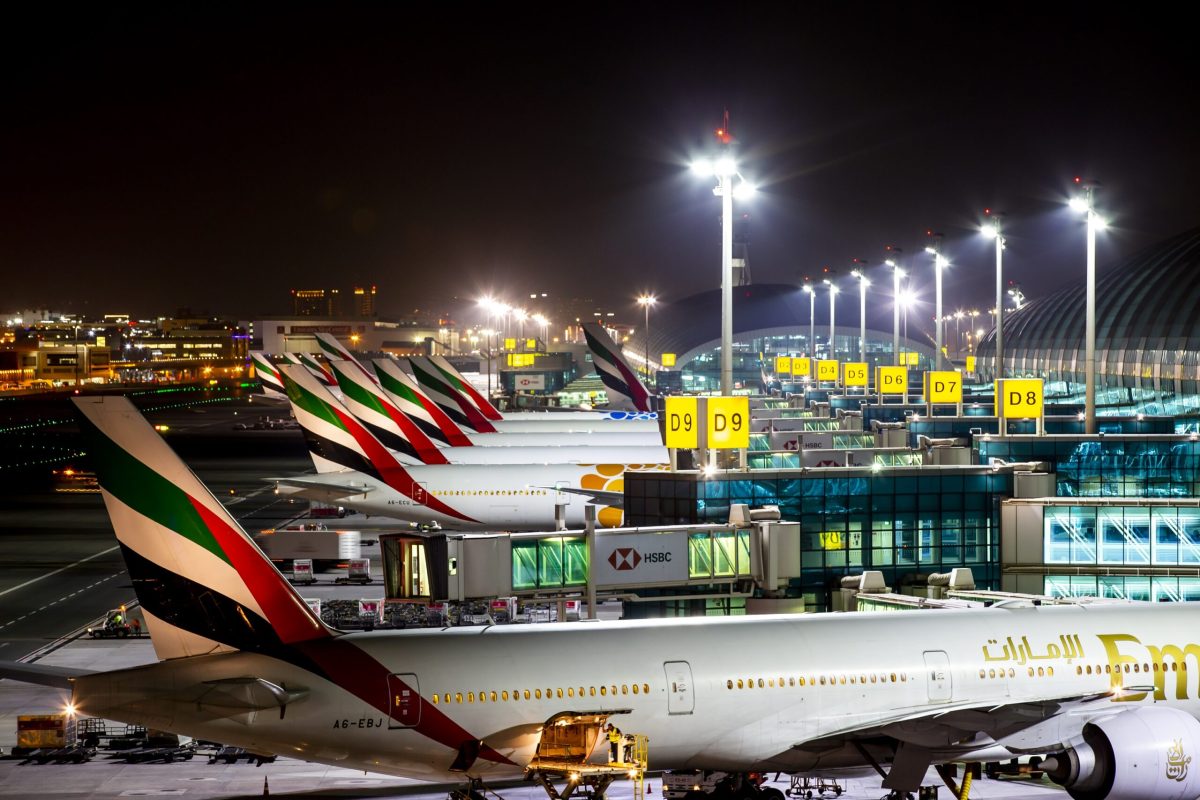
The human toll is mounting fast. In Dubai, missile strikes damaged the airport and the Fairmont Hotel on Palm Jumeirah, injuring four people. Abu Dhabi International Airport took hits in a separate attack, killing one person and injuring seven. The damage has triggered unusual scenes on normally quiet desert highways, with travelers attempting to flee the region by car to Oman.
Where the shutdowns stand right now
Israeli airspace remains closed to commercial traffic until at least March 3, but internal assessments suggest Ben Gurion Airport could stay locked down through March 6 or 7. El Al has frozen ticket sales until March 21 to focus on evacuating stranded passengers, and travelers trying to reach Israel are now using overland routes via Egypt and Jordan instead.
In the UAE, Emirates suspended all operations to and from Dubai until at least 3 p.m. on March 3, while Etihad halted Abu Dhabi operations and reviews the situation hourly. Only eight passenger flights managed departures from Abu Dhabi after 2 p.m. local time on March 2.
Qatar and the UAE have stepped up to offer stranded passengers food and accommodation at safer locations away from airports, acknowledging that this crisis will not resolve quickly even once missiles stop flying.
The airline-by-airline breakdown
The cancellation list reads like a who's who of global aviation. Air Canada pulled flights to Israel through March 8 and to Dubai through March 3, while KLM suspended routes to Tel Aviv and Beirut through March 7, plus Dubai, Riyadh, and Dammam until March 5. Lufthansa grounded flights to Abu Dhabi and Dubai until March 4, with Beirut, Tel Aviv, and Oman routes cancelled through March 7.
British Airways cancelled service to Tel Aviv and Bahrain through March 3 and is offering flexible rebooking on Middle East routes through March 15. ITA Airways pulled its Tel Aviv flights until March 7 and Dubai flights until March 3, while avoiding Israeli, Lebanese, Jordanian, Iraqi, and Iranian airspace entirely. Japan Airlines suspended its Tokyo Haneda to Doha connection until March 5. Air India extended suspensions of UAE, Saudi Arabia, Israel, and Qatar flights through March 2, and also cancelled multiple long-haul services from Indian cities to London, New York, Chicago, Toronto, Frankfurt, and Paris due to instability in Middle Eastern skies.
Smaller carriers are hit just as hard. Flydubai suspended all flights until further notice. Azerbaijan Airlines grounded service to Dubai, Doha, Jeddah, and Tel Aviv. Cathay Pacific halted all Dubai and Riyadh operations, including freighter services. Iberia Express cancelled Madrid to Tel Aviv flights through March 10. Air Astana, Air France, and Indigo each suspended or cancelled hundreds of flights across the region.
Air Canada has updated flexible booking policies for customers traveling to or connecting through affected areas, and other carriers are offering similar provisions, though rebooking onto alternative routes is proving difficult when so many airspaces remain shut.
What happens next
Here's the hard truth for stranded travelers: even when tensions ease and airspaces reopen, it will take days to rebuild flight schedules and operate return flights. Airlines have promised rebooking on alternative routes, but with thousands of passengers stuck and thousands of cancelled flights backed up, the backlog will be enormous.
Several countries have begun organizing repatriation flights for their own nationals, recognizing that the commercial aviation system alone cannot handle the current crisis. If you're traveling to or through the Middle East in the coming weeks, check directly with your airline for the latest updates. Routes will continue changing as the situation evolves, and getting reliable information beats relying on outdated flight schedules.