The way we book hotels is about to feel less like shopping and more like texting a friend who knows every property on Earth. Wyndham, Marriott, Hilton, IHG, and Choice Hotels are all racing to embed conversational AI into their booking platforms, recognizing that travelers (especially Gen Z, nearly half of whom use TikTok for travel ideas) want smarter ways to find their next stay.
The shift happened fast. This week alone, Wyndham launched what it claims is the hotel industry's first native ChatGPT app, while Choice Hotels rolled out AI across its entire discovery and booking ecosystem. Both moves signal a fundamental rethinking of how travelers interact with hotel companies online.
What These New AI Tools Actually Do
Wyndham's ChatGPT integration lets you describe what you're after in plain language rather than filtering by endless dropdown menus. Want a beachfront property with a spa and under $200 a night? Just say it. The app searches across 8,400 hotels and handles everything conversationally. "We're making searches more intuitive," said Scott Strickland, Wyndham's Chief Commercial Officer. The company has already invested heavily here, pouring $450 million into technology since 2018, and it became the first major hotel group to integrate Anthropic's Claude in 2025.
Marriott's approach is called "Ask Bonvoy," a natural language search tool designed to make trip planning feel personal and effortless. Chat with it about your preferences, and when you've decided, the system passes you straight to Marriott's booking engine to complete your reservation. Hilton launched a similar beta AI Planner this spring, offering a generative AI concierge that helps you explore properties, compare amenities, and build your travel itinerary in conversation.
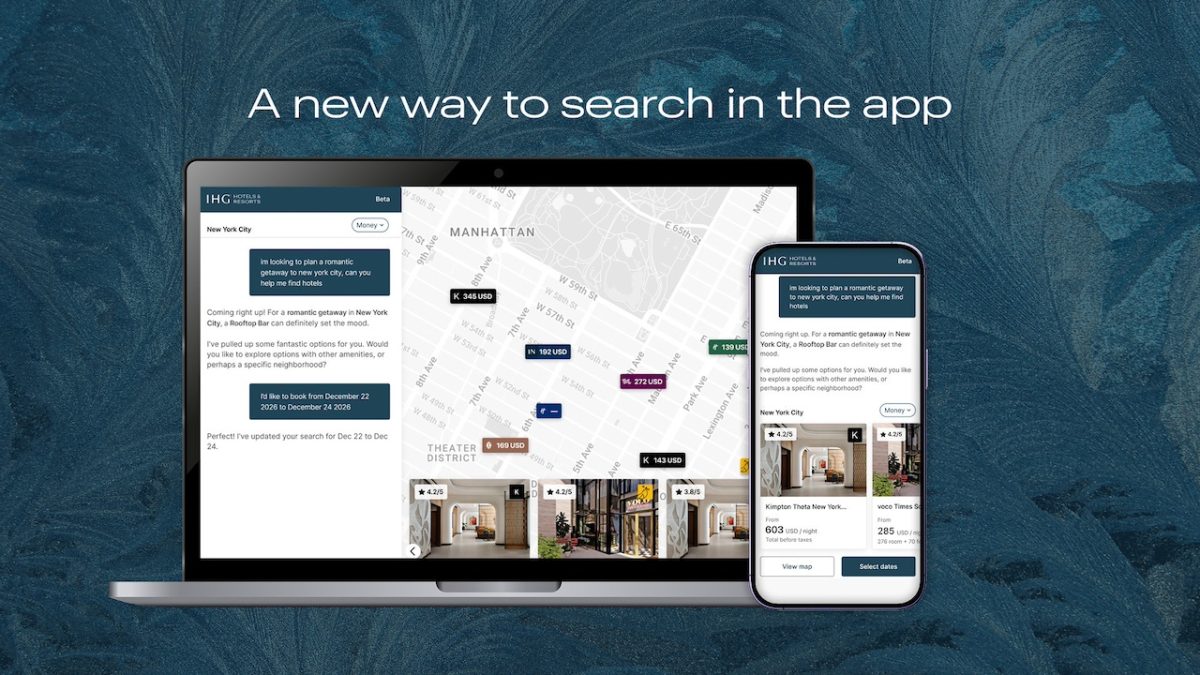
IHG Hotels & Resorts deployed a beta conversational search tool focused on review-driven recommendations pulled from its 7,000-property portfolio. Choice Hotels went deeper, embedding AI not just into guest-facing search but also into franchise operations. Its suite includes CHARLIE, an AI teammate helping staff with day-to-day systems, plus EasyBid for automated bidding and RAISE for dynamic pricing management.
Why Hotels Are Moving So Fast
The answer comes down to money and market share. Hotels are competing for direct bookings and want to lock customers into their loyalty programs rather than lose them to third-party booking platforms with their own AI search. A new Amadeus report found that 69% of travelers are confident enough in AI-generated travel summaries to base their decisions on them without further research. That's both opportunity and threat. If your hotel brand doesn't offer a smart search experience, guests will find one elsewhere.
CEO Elie Maalouf of IHG explained it plainly: the goal is acquiring direct-booking customers, retaining loyalty members, and optimizing commercial opportunities while cutting costs. Wyndham framed it differently but meant the same thing. "Whether it's reducing operating costs, driving revenue, or expanding onto new platforms like ChatGPT, our job is helping franchisees compete harder and give guests a better experience," said Michael Mahar, the company's senior vice president of commercial technology.
The Bigger Picture
What's happening in hotels mirrors a broader shift across travel. Airlines and booking platforms are racing similar AI innovations, and destinations themselves are now competing not just on real estate and attractions but on how they appear in the digital information space. If an AI recommends you a place, you're more likely to go there. That changes everything about how travel marketing works.
For travelers, the benefit is obvious: fewer clicks, faster decisions, more personalized results. For hotel companies, the stakes are survival. The next few years will reveal which ones built AI features that actually work versus those that just bolted on chatbots for show.