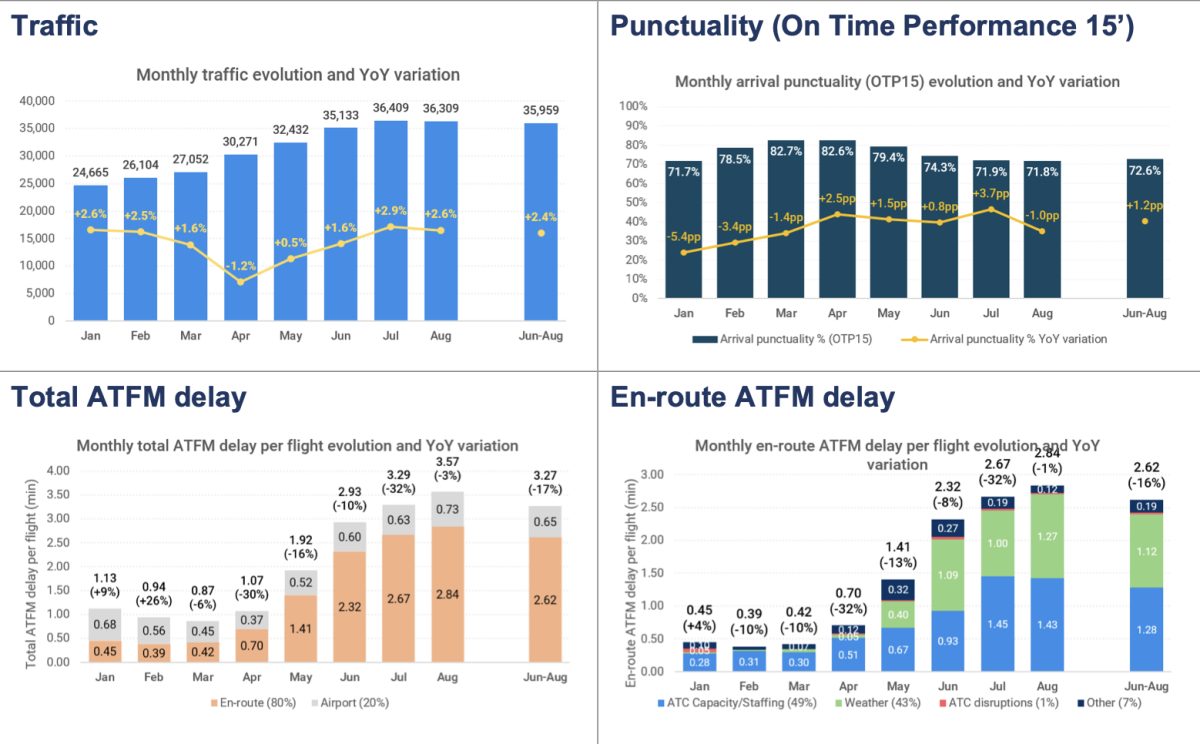
Europe's skies have never been so crowded. Between June and August 2026, the continent's air traffic control network handled an average of 35,959 flights per day, a 2.4% jump from the previous summer. On July 10, a Friday, the system hit an all-time peak with 37,640 flights in a single day. That's a lot of wingtips and window shades.
The numbers come from Eurocontrol's summer flash briefing, which tracks every flight across the region. All told, 66 daily traffic records were shattered, spread across 11 airlines, 16 airports, 24 air traffic control centers, and 14 countries. It's the kind of growth that would make any air traffic controller reach for a second coffee.
Conflict Reroutes Reshape the Map
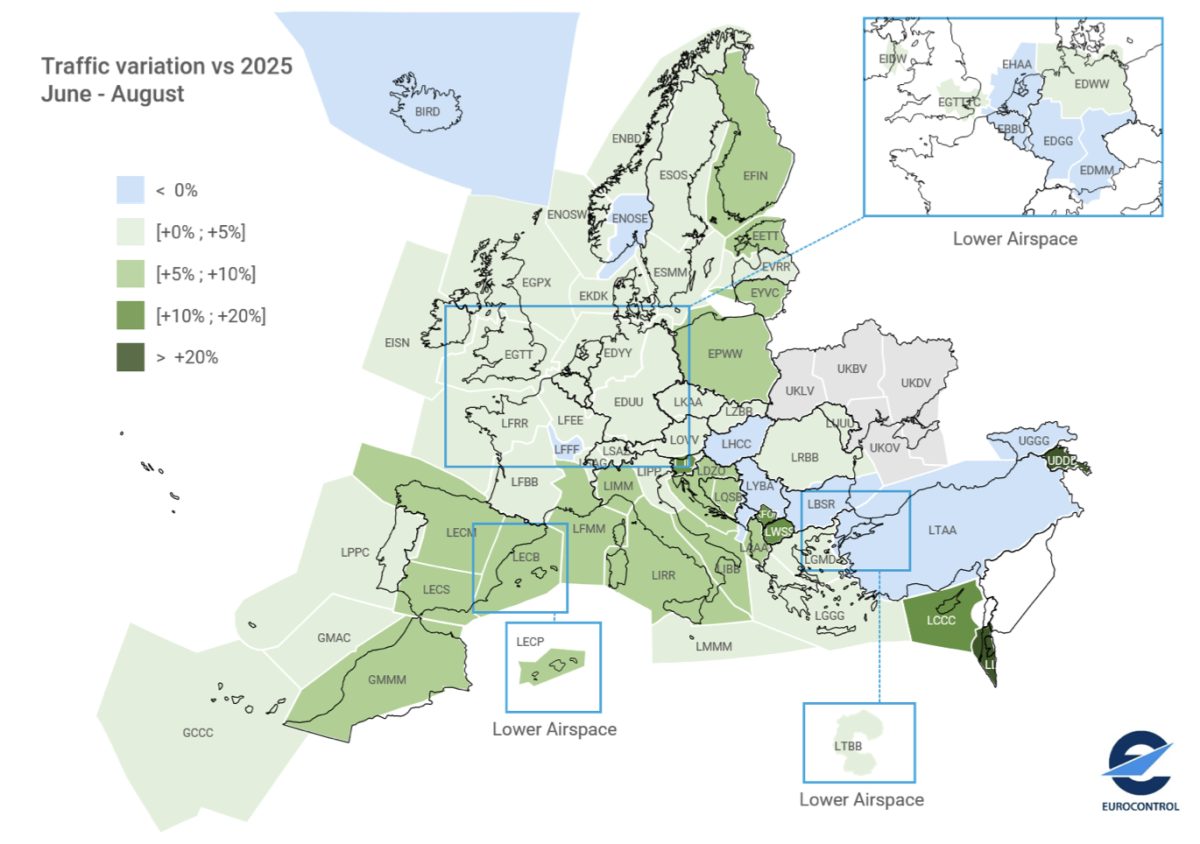
All this happened while the Middle East conflict continued to rattle the region's flight paths. Earlier in the year, Eurocontrol estimated that flights between Europe and the Middle East had dropped by 59%, with around 1,150 flights per day needing reroutes to dodge conflict zones and closed airspace. That ripple effect was still visible in the summer traffic patterns.
Some countries felt the squeeze. Bulgaria, Hungary, Romania, and Türkiye saw less traffic, while Albania, Croatia, Cyprus, Greece, Montenegro, North Macedonia, Serbia, and Slovenia posted strong gains. Southwestern Europe kept climbing too. The result is a patchwork of busy and quiet skies, a direct consequence of geopolitics playing out at 35,000 feet.
Better Punctuality, Despite the Chaos
Here's the surprise: despite the record numbers, things actually ran smoother. Arrival punctuality hit 72.6%, up 1.2 percentage points from last summer. Air traffic flow management delays dropped by 17%, averaging just 3.27 minutes per flight. That's a win for anyone who's ever sprinted through an airport to catch a connection.
But don't pop the champagne just yet. Around 681,000 flights still faced delays, which works out to roughly 7,400 flights per day, or 21% of all traffic. Capacity and staffing issues caused nearly half of those en-route delays, while severe weather, think the kind of summer storms that made August 2026 the hottest on record, accounted for 43%. Industrial action? Just 1%.
France and Greece Feel the Heat
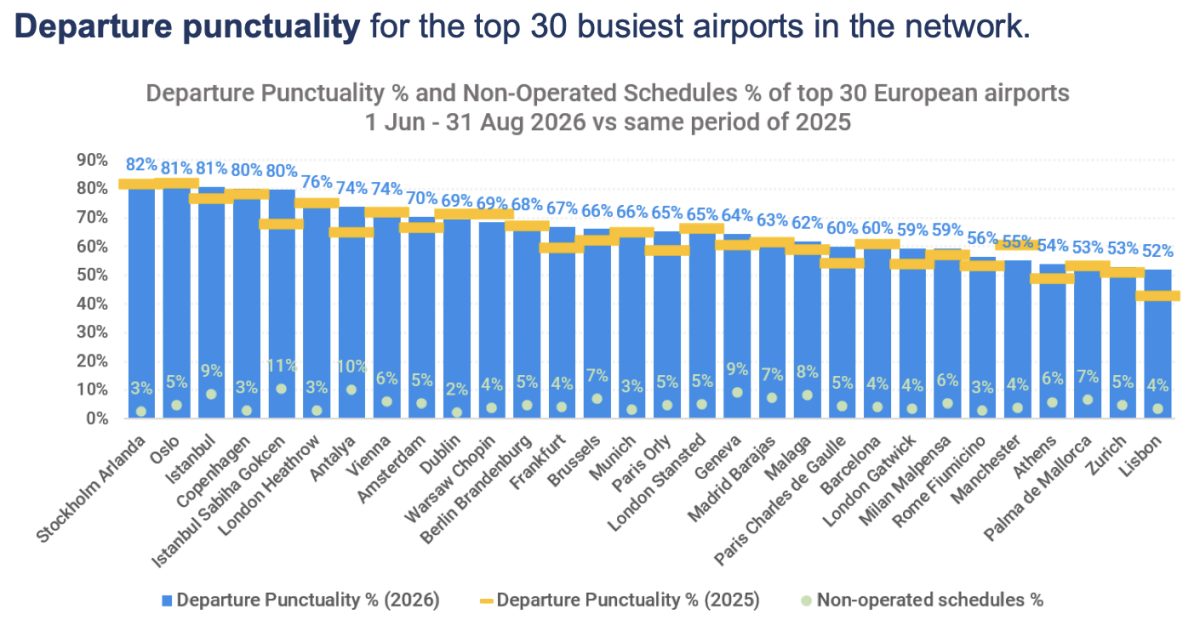
France was the biggest bottleneck, responsible for 32% of air traffic management-related delays. Greece also struggled, with record passenger numbers pushing its air traffic control to the limit. If you flew into Athens or Santorini this summer, you might have felt that squeeze firsthand.
Eurocontrol says 45 of Europe's 68 area control centers are on track to meet capacity targets by the end of 2026. Another 10 are still in the game but dealing with weather and the Middle East crisis. That leaves 13 centers expected to miss the mark. The agency is already studying what went right and wrong, with an eye on network planning, staffing, and airspace modernization for summer 2027.
For travelers, the takeaway is simple. Europe's aviation system is stretched but holding. The record-breaking summer shows that even with geopolitical turmoil and extreme weather, the continent can keep planes moving. Just maybe pack a book for the tarmac, just in case.