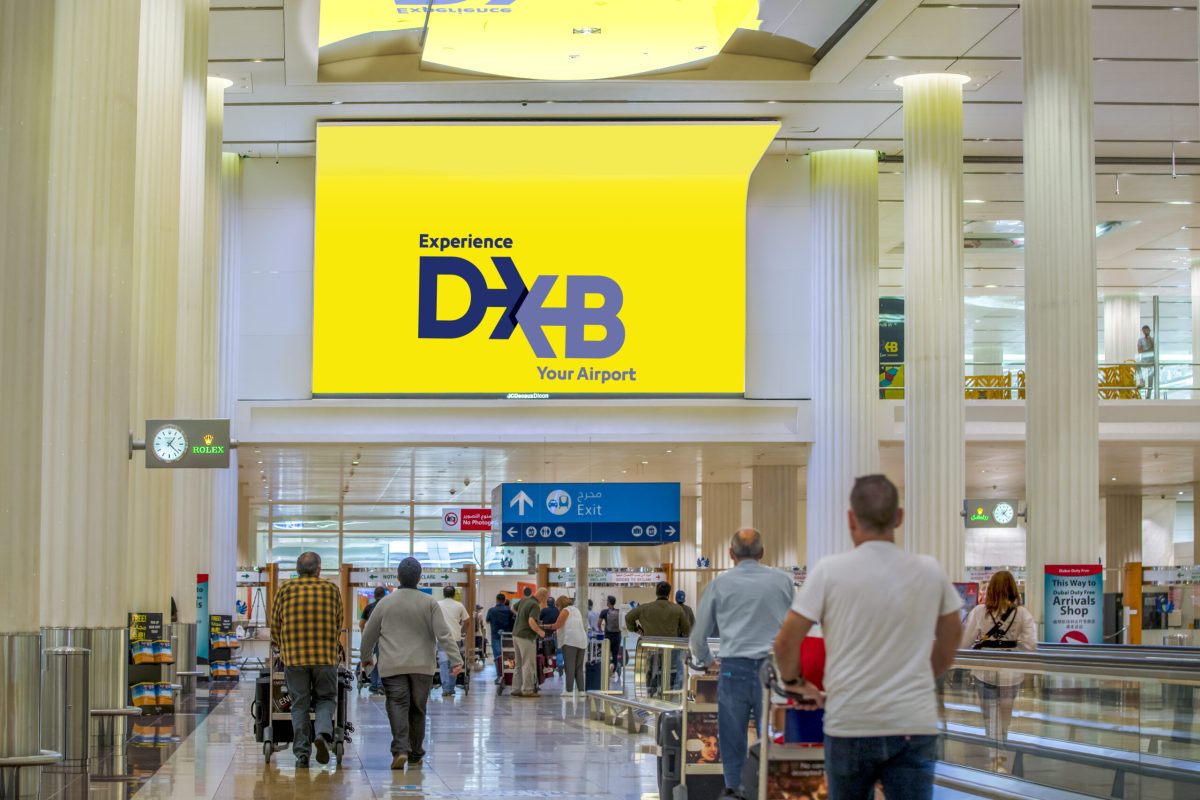
Dubai International Airport holds a peculiar kind of power in global travel. Roughly one in every 20 international airline passengers passes through its terminals each year. When something goes wrong there, it ripples across continents within hours.
In March 2026, something went very wrong indeed. The airport's passenger traffic collapsed by 66 percent compared to the same month a year earlier. Instead of the usual 7 million travelers, DXB handled just 2.5 million. For context, that's like removing the entire population of Los Angeles from the airport's monthly throughput.
When Regional Conflict Hits the Airport
The disruption traces directly to escalating tensions in the Middle East. From late February through early April, Iranian drone and missile activity forced widespread airspace closures across the region. The Islamic Republic launched ballistic missiles and unmanned systems at nine countries in the area, targeting military installations alongside civilian infrastructure like fuel depots and data centers. Tens of thousands of travelers found themselves stranded as airlines cancelled flights, rerouted aircraft, and held planes on the tarmac.
Paul Griffiths, the chief executive of Dubai Airports, called the situation "unprecedented for any major airport hub." Even he seemed taken aback by the scale of the disruption. The airport still managed to process over six million passengers, handle more than 32,000 aircraft movements, and move 213,000 tonnes of cargo during the chaos, but those figures only highlight how far below normal capacity operations had dropped.
The Broader Picture Gets Worse
The March figures represent only part of the damage. Over the first quarter of 2026, DXB welcomed 18.6 million passengers, down 21 percent from 23.4 million during the same three months in 2025. The airport had welcomed 95.2 million passengers in 2025 and been eyeing close to 100 million for the current year. That ambitious target now looks entirely out of reach.
Dubai's strategic location makes it the central nervous system for long-haul aviation connecting Europe, Asia, and Africa. Any disruption at DXB sends shockwaves through the entire aviation network. Airlines reroute flights, adding hours to journey times and costs to operations. Passengers face delays, cancellations, and the uncertainty that comes with geopolitical turmoil.
Recovery Remains Uncertain
Just as the airport announced a return to normal operations over the weekend, renewed Iranian activity once again disrupted regional airspace. Flights bound for Dubai and Sharjah were held, diverted, or rerouted. Aviation tracking data showed multiple aircraft altering course as tensions escalated, creating a situation aviation observers compared to the chaos of early March.
Griffiths issued an optimistic statement on LinkedIn before the fresh attacks, noting that "demand for travel through Dubai remains strong, and DXB is well-positioned to progressively increase capacity." That optimism now feels premature. The March downturn and Q1 decline serve as sobering reminders that even the world's most resilient aviation hubs cannot isolate themselves from geopolitical shock.
For travelers planning trips through the Middle East, the takeaway is clear: check your carrier's specific route status, build extra buffer time into connections, and monitor regional news. The recovery, whenever it comes, will take longer than most expect. If you're thinking about flying through Dubai in the near term, flexibility matters more than ever.