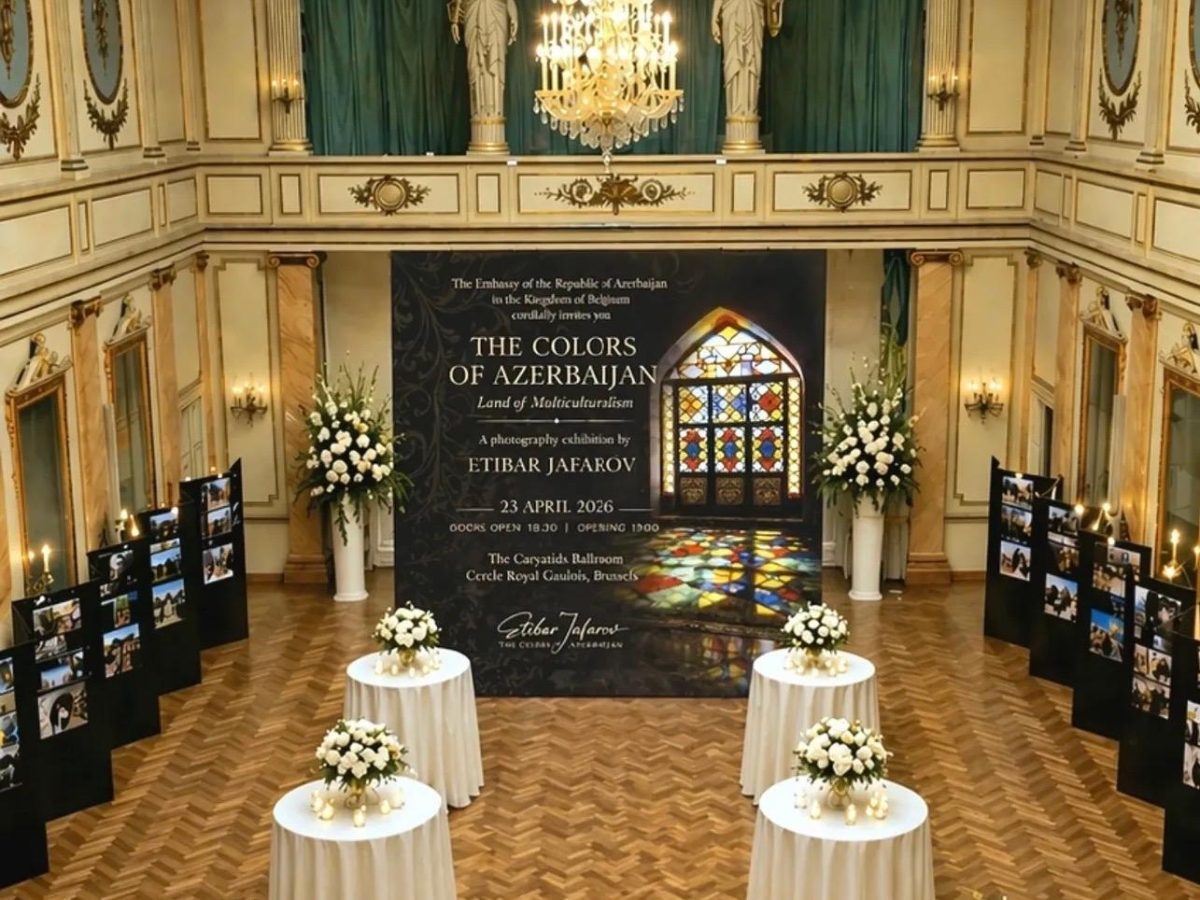
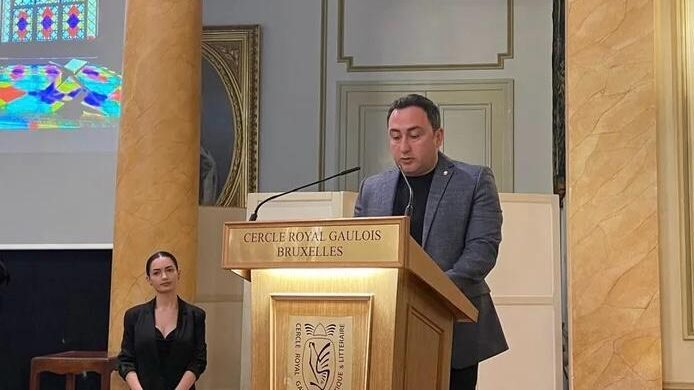
When you think of Brussels, you probably picture chocolate shops, medieval squares, and the seat of European power. What you might not expect is a sudden window into Azerbaijan's most compelling story. Yet that's exactly what opened on April 23 at the prestigious Cercle Royal Gaulois, where photographer Etibar Jafarov's exhibition "The Colors of Azerbaijan: Land of Multiculturalism" pulled together diplomats, artists, and curious Europeans for an evening that felt less like a typical cultural event and more like a genuine conversation about what it means to build a society on difference.
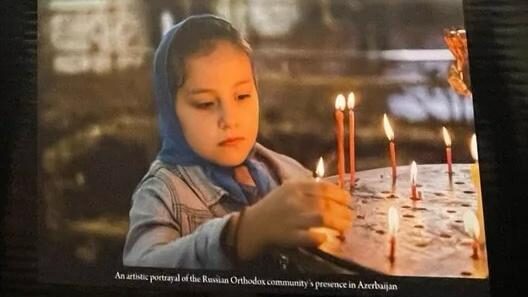
The photographs on display do something rare: they sidestep the usual tourist clichés and instead document the texture of ordinary life. You see religious heritage alongside daily routines. Traditional customs appear not as museum pieces but as living practices. The collection captures human stories, not monuments. For many visitors, it was their first real glimpse into how mosques, churches, and synagogues actually function as neighbors in the same neighborhoods, not abstract ideals in a textbook.
Multiculturalism as Lived Reality
Vaqif Sadiqov, Azerbaijan's Ambassador to Belgium, framed the exhibition as something far more than a photo show. Standing before the crowd, he made a distinction that matters: multiculturalism in Azerbaijan isn't a political slogan or a marketing angle. It's how people actually live.
"Azerbaijan has stood at the crossroads of civilizations for centuries," Sadiqov told guests. "Our geography shaped our history, but our people shaped our identity. That identity rests on coexistence, mutual respect, and openness." He went on to describe representatives of different religions and ethnic groups continuing to live together peacefully across the country, with religious spaces functioning side by side. This wasn't presented as an achievement to celebrate from a distance. It was described as a conscious choice reflecting a fundamental belief that diversity strengthens nations rather than fracturing them.
For travelers accustomed to hearing conflict narratives dominating coverage of the region, this framing landed differently. The ambassador spoke of cultural diplomacy not as soft power but as bridge-building rooted in genuine human connection.
Photography as a Border-Crossing Language
Here's where the exhibition becomes smartly strategic: by hosting it in Brussels, a city that serves as the nerve center of European institutions and one of the world's most genuinely international places, the organizers weren't speaking to the converted. Brussels attracts global attention precisely because it's where different interests must learn to coexist. The parallels were impossible to miss.
The evening's programming reinforced this through cultural exchange. Azerbaijani musicians studying in Belgium contributed performances, turning the opening into a genuine cross-cultural moment rather than a one-way presentation. Guests mingled with members of Brussels' diplomatic corps and cultural figures, creating the kind of spontaneous dialogue that photographs alone can't capture.
What struck many visitors was how effectively photography functioned as a universal language. No translation needed when you're looking at someone preparing a meal, tending to a garden, or observing a religious ceremony. The camera doesn't editorialized. It simply documents, and in doing so, it reveals.
A Traveling Exhibition With Roots
This wasn't Jafarov's first international showing. The collection has previously exhibited in Finland and Spain, including Barcelona, which suggests the work resonates across different European contexts. Each location brings its own audience, its own set of assumptions, its own capacity for surprise.
For travelers planning a deeper dive into Azerbaijan itself, exhibitions like this serve as a useful primer. They signal what to pay attention to when you arrive: the neighborhood where different religious spaces cluster together, the family dynamics that transcend religious boundaries, the historical layers visible in everyday routines. Travel is richer when you arrive with some framework for understanding what you're seeing.
The exhibition reflects a broader shift in how destinations market themselves internationally. Rather than relying on landscape photography or iconic monuments, Azerbaijan chose to lead with something harder to capture but ultimately more valuable: the actual social fabric that makes a place worth visiting. It's an approach that respects travelers' intelligence and curiosity, assuming they want depth rather than postcards.