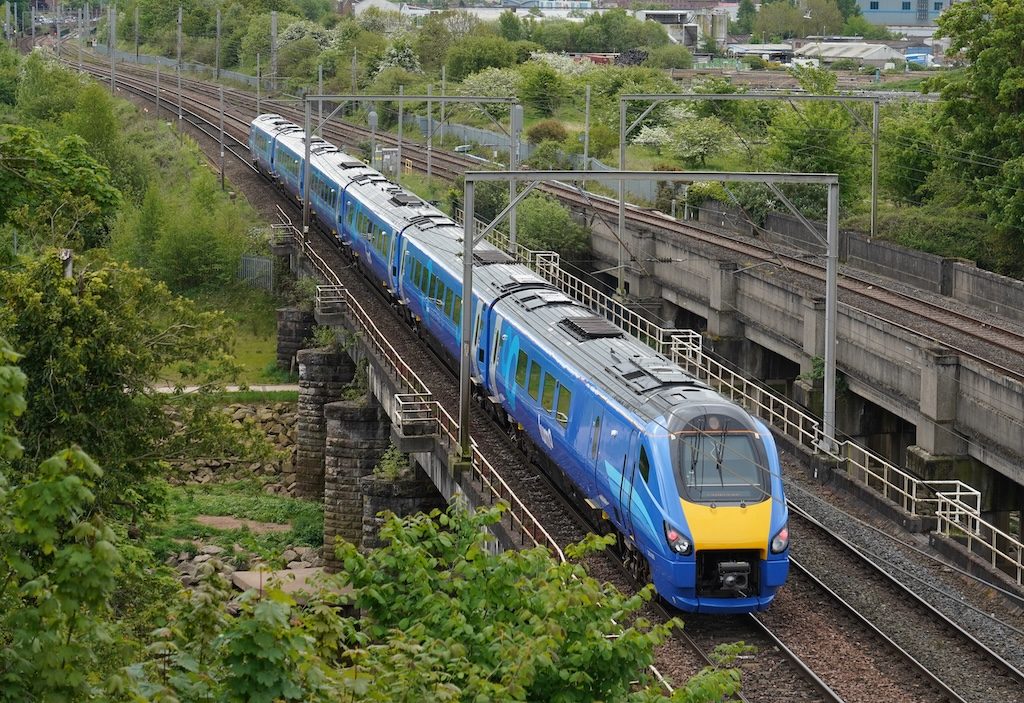
Here's something that rarely happens in British rail: a budget operator actually making things better before you complain. Lumo, the UK's low-cost electric train service, has announced it will install Starlink satellite internet across its entire East Coast Main Line by autumn 2026. This means passengers heading from London King's Cross all the way to Edinburgh, Glasgow, Newcastle, and beyond will soon have genuinely reliable WiFi for the entire journey.
The partnership brings together Lumo, train manufacturer Hitachi, connectivity specialist Icomera, and Beacon Rail to integrate SpaceX's satellite system into the trains. Unlike traditional WiFi that relies on ground-based infrastructure, Starlink uses a network of low Earth orbit satellites. The technology delivers fast speeds with minimal lag, which matters when you're trying to actually get work done at 125 miles per hour.
Why this feels different from typical rail promises
Paul Jackson, Lumo's Head of Customer and Stakeholder Engagement, put it plainly: "Reliable onboard WiFi is increasingly important for customers choosing to travel by train, whether for work, entertainment, or just staying connected with friends and family." That's refreshingly honest. Traditional trackside systems can't handle the coverage gaps on long-distance routes, especially once you venture into rural Scotland. Mobile-based backups struggle in the same ways. Starlink fixes this by delivering consistent quality across the full route, no dead zones.
Lumo already operates 5G-enabled WiFi on its West Coast services between London Euston and Stirling, putting it ahead of most UK rail operators. Rolling Starlink onto the East Coast line cements the company's position as the one thinking ahead about what passengers actually need during a four-hour train ride.
What this means for your journey
Whether you're catching up on work emails, streaming a film, or video-calling someone across the country, you'll have the bandwidth to do it without those agonizing buffering moments. For business travelers, this removes one of the last excuses to avoid the train and drives instead. For leisure passengers, it transforms what could be dead time into productive or entertaining time. It's a small thing that actually changes how the journey feels.
The timing matters too. As more people seek sustainable travel options, reliable connectivity on trains makes them genuinely competitive with driving or flying. Europe is investing heavily in rewiring its entire rail network, and Britain's getting there through partnerships like this. Technology companies like budget airlines experimenting with Starlink show there's real appetite for seamless connectivity on transport.
The bigger picture
Lumo has already earned recognition for creative thinking. The company was recently shortlisted at the Leadership in Passenger Transport Awards for a campaign placing live train information and ticket prices on petrol station forecourt screens. It's a clever nudge toward sustainable travel. Adding Starlink follows the same philosophy: remove friction, make the train option more appealing than the alternative.
The rollout begins this autumn, so if you're planning a London to Edinburgh trip in the coming months, you might experience the old system first. But soon enough, reliable global-standard WiFi on a UK train won't feel like a luxury. It'll feel like the bare minimum, the way it should be.
Lumo announced the news on social media, positioning it as a major upgrade to the customer experience. Given how many people now expect to work or stream while traveling, they're not overstating it.