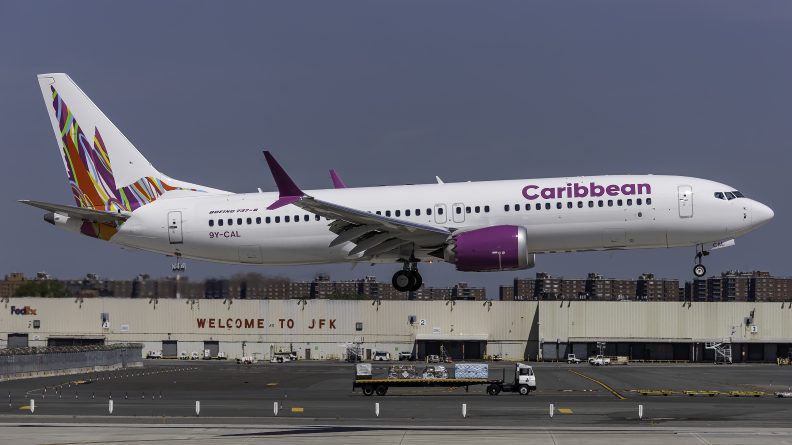
Flying while pregnant can feel like a gamble. What if labor starts 30,000 feet above the Atlantic? Over Easter weekend, that's exactly what happened on Caribbean Airlines Flight BW 005, a four-hour journey from Jamaica's Norman Manley International Airport bound for John F. Kennedy International in New York.
As the Boeing 747 Max 9 prepared to descend into the New York airspace, the pilot radioed a calm but urgent message to ground control: a passenger was in active labor, and they needed immediate clearance for approach. The flight crew had the presence of mind to execute a direct descent, requesting a navigational fix to bring the aircraft down as quickly as possible.
What happened next was both miraculous and beautifully ordinary. The baby arrived just minutes before the wheels touched the tarmac at JFK. Medical personnel were waiting at the gate. Mother and newborn were healthy. And then came the exchange that went viral.
The Joke That Became Part of the Story
Once the initial relief settled in, an air traffic controller couldn't resist a bit of airport humor. "Is it out yet?" the controller asked the pilot. When told yes, they replied: "Tell her she's got to name it Kennedy." The pilot's response? "Ahh Kennedy. Will do."
It's a moment that captures something special about aviation. In an industry often defined by rigid protocols and safety-first procedures, there's still room for humanity and humor when it matters most. The exchange became a reminder that behind every flight number and departure time are real people navigating real moments, sometimes literally bringing new life into the world.
Why In-Flight Births Are Exceptionally Rare
Here's what makes this story remarkable: experts estimate that a baby is born in the air roughly once for every 26 million passengers. That's about one birth per year globally. The odds are vanishingly small, and that's not by accident.
Most airlines prohibit pregnant women from flying after 36 to 37 weeks of pregnancy (or 32 weeks for multiple births), a standard designed specifically to prevent in-flight labor. Passengers often need a doctor's clearance letter, and those with complications like high blood pressure or anemia may be grounded entirely. When complications arise, women are encouraged to skip the skies altogether.
Yet somehow, every couple of years, another story bubbles up. In February 2025, a baby was born aboard a Brussels Airlines flight from Africa to Belgium. Just three months later, a second infant arrived on a Ryanair flight from Belgium to Spain. After years without incident, it seems the skies are having babies again.
The Citizenship Question Nobody Expects
There's one more wrinkle in this already unusual story: nationality. If you're born at sea or in international airspace, which country claims you as a citizen?
Typically, a child born on an aircraft takes the nationality of their parents, following the legal principle of jus sanguinis (blood right). But in rare cases where that might leave a child stateless, they can claim citizenship of the country where the plane is registered, or if flying within 12 nautical miles of the United States, they can become a U.S. citizen. Since this birth occurred while approaching JFK, the newborn might have opened up options that other internationally born babies don't have. Citizenship rules are notoriously complex, and aviation births add another layer of legal intrigue.
For now, the Easter weekend birth at JFK stands as a testament to the unexpected ways travel unfolds. Sometimes you board a plane thinking you'll just reach your destination. Sometimes you arrive with more passengers than you left with.