Picture this: you board a plane in Sydney, sleep for roughly 20 hours, and wake up in London. No stopover in Singapore. No connection through the Middle East. Just pure, uninterrupted travel across nearly the entire planet. That wild scenario is no longer science fiction. It's coming in October 2027, and we now have proof it actually works.
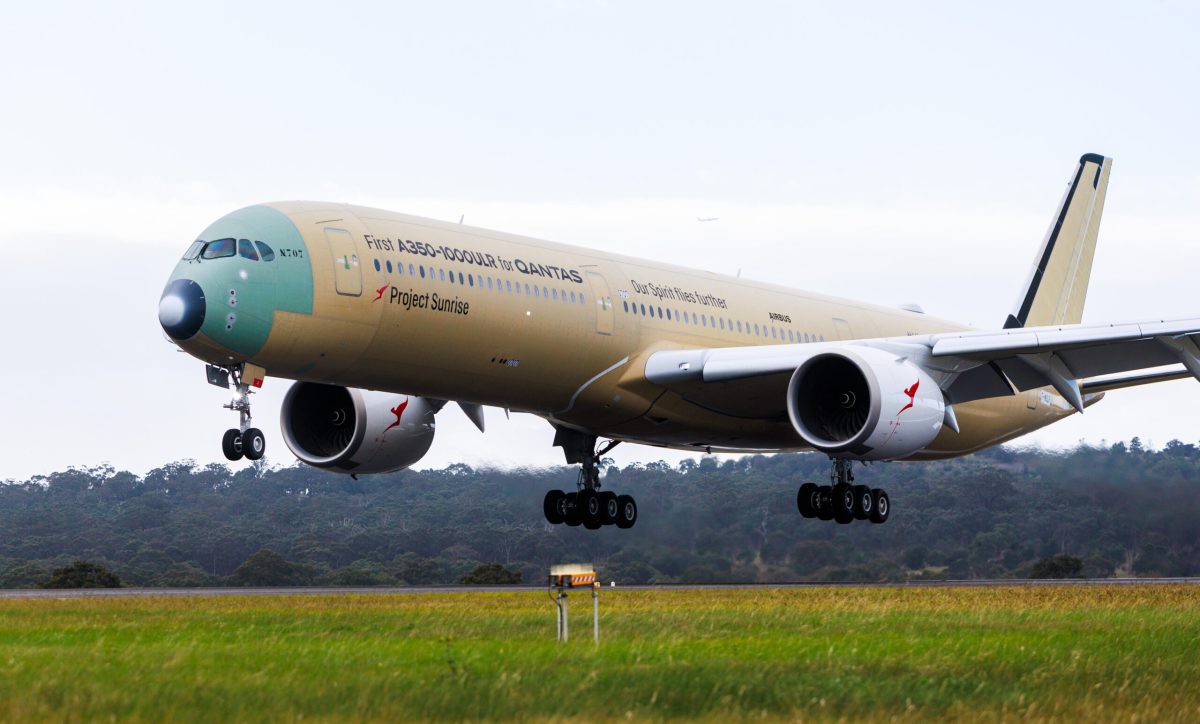
On a sweltering July morning, Qantas's Project Sunrise aircraft touched down in Melbourne after flying directly from Toulouse, France in just under 20 hours. The specially modified Airbus A350-1000ULR completed the journey with ease, carrying four Airbus test pilots and five flight engineers. What makes this so remarkable isn't just the distance; it's that this aircraft represents a fundamental shift in how we think about long-haul travel. The plane is the first of 12 that Qantas has ordered, and it's been engineered specifically to handle the brutal demands of ultra-long-haul flights.
The engineering feat behind the marathon flight
The secret to this aeronautical breakthrough sits in the belly of the aircraft: an extra 20,000-liter fuel tank. That single modification enables the A350-1000ULR to operate flights lasting up to 22 hours straight. It sounds simple, but the engineering required to balance weight, aerodynamics, and safety across such extreme distances is genuinely impressive. The aircraft also had to be specially certified for these record-breaking journeys, making this test flight a crucial validation.
The level of public interest was staggering. More than 75,000 people tracked the flight live on Flightradar24, making it the second most-followed flight on the platform ever. Only the flight carrying Queen Elizabeth II's coffin from Edinburgh to London in 2022 drew more eyes. Aviation enthusiasts understood they were watching history unfold.
The return journey from Melbourne to Toulouse, expected to take around 23 hours, will be even more grueling. Two Qantas pilots will join the crew to help test fuel management systems, air conditioning, and other operational elements under real-world conditions. Built-in rest periods will give the team breaks, though as Chief Technical Pilot Alex Passerini put it bluntly: "Everyone is going to get tired."
When you can actually book these flights
Tickets for the inaugural Sydney-London service go on sale in February 2027, with flights beginning in October that same year. New York service will follow after that. The aircraft are currently rolling off production lines and should start arriving in April 2027, though the airline has experienced some program delays getting here.
The 238-seat cabin will include a wellness zone located between premium economy and economy seating. Qantas has partnered with the Charles Perkins Centre and brought in sleep medicine professor Peter Cistulli to design the cabin experience. The challenge is real: crossing up to 16 time zones (for New York flights) is "a major biological challenge," according to Cistulli. Light exposure is the body's strongest time-keeping cue, so the airline has obsessed over cabin lighting, meal timing, and designated sleep periods to help passengers adjust faster.
There's another wrinkle that sounds counterintuitive but actually works. The London-Sydney route will fly directly over the North Pole. Yes, the North Pole. While that route appears longer on flat maps, the favorable winds along the polar path can actually make it the faster option depending on the season. It's the kind of logistical detail that separates real aviation engineering from armchair dreaming.
What this means for travelers
For decades, the longest commercial flights have topped out around 17 to 18 hours. The prospect of cutting weeks of total travel time out of your life across dozens of trips adds up. Business travelers will save countless hours. Couples visiting family on opposite sides of the world can finally stop choosing which relatives to see. The economics of long-haul travel are about to shift in dramatic ways.
As Qantas CEO Vanessa Hudson noted, the airline plans to "announce the routes progressively as the new aircraft arrive over the next two and a half years." Demand can shift, and the airline wants flexibility to respond. That said, the dream of direct flights from Sydney to London and New York is now locked in.
The test aircraft itself wears a plain tan livery rather than Qantas's signature red while undergoing trials. It's bare-bones, utilitarian, almost military-looking. But for everyone who's endured a 15-hour cramped economy seat with a connection looming, that humble test plane represents something genuinely revolutionary. The impossible, it turns out, was just waiting for the right amount of fuel and engineering ingenuity.