Belgium has more beer styles than most countries have cities. Walk into any supermarket and you'll encounter walls of blondes, tripels, lambics, and IPAs in dizzying variety. For any newcomer to the scene, the challenge isn't finding a recipe that works. It's telling a story worth believing.
Dimitri Tips and Anirudh Bobbili discovered that story by accident. We met on a café terrace in Tervuren, just outside Brussels, where Tips walked me through an unlikely journey from beer-mat collection to commercial brewing. His obsession began as a child gathering beer mats with his grandfather and parents, eventually assembling around a thousand different examples. Later, university studies in industrial engineering and biochemistry introduced him to the science behind fermentation. He even completed a thesis at what became AB InBev, working on filtration projects with Leffe Brune and witnessing industrial brewing at an entirely different scale. Yet none of this pointed toward actually making beer himself.
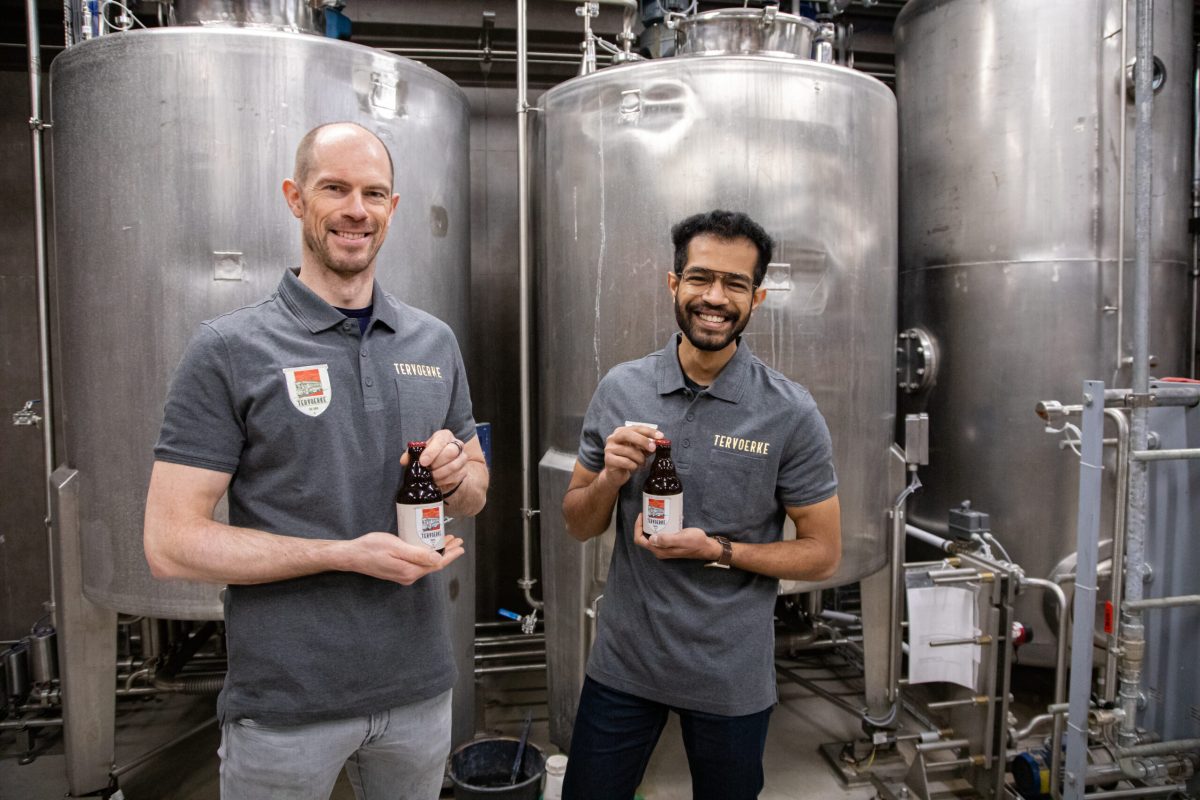
That changed in 2017 when Tips met Bobbili through work. They discovered an overlapping passion for beer and beverage development, the kind of shared curiosity that leads to late-night experiments. In 2019, they set up a simple fermentation system on Tips' terrace and brewed their first batch. The result wasn't destined to revolutionize Belgian brewing, but it hooked them. During the Covid-19 lockdown, their experimentation accelerated. Every few months brought a new batch, each one testing different approaches. By 2021, they had narrowed their focus to creating the perfect tripel. Six yeast prototypes went through blind tastings by two separate panels. Remarkably, both groups independently selected the same version.
A beer that tastes like a place
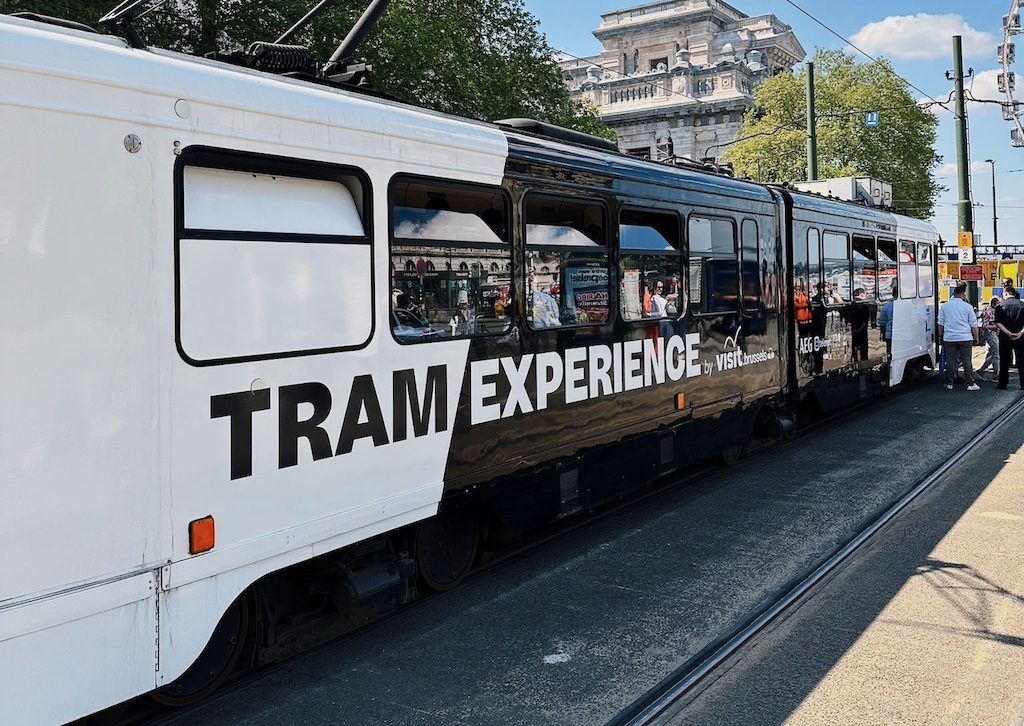
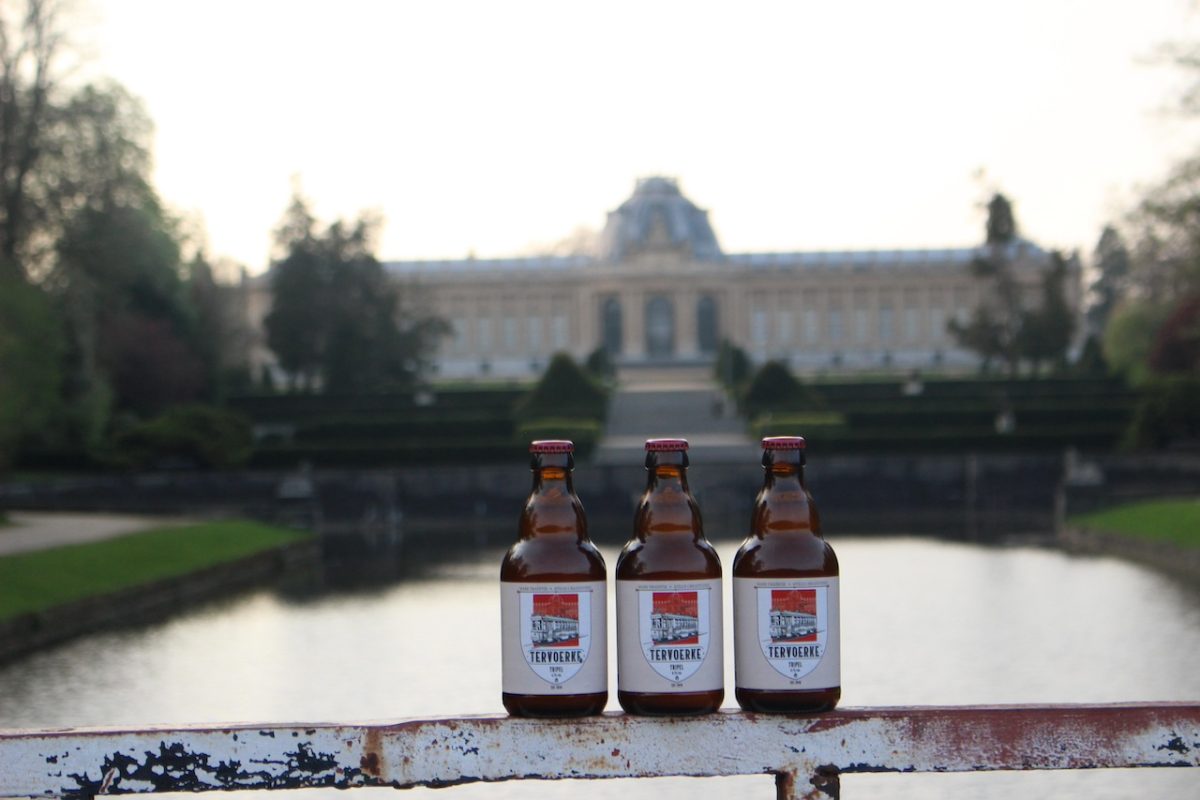
The product mattered, but so did anchoring it to somewhere real. Take a close look at a Tervoerke label and you'll see Tervuren woven into every detail. Tram 44 dominates the design, that scenic heritage line connecting Brussels to Tervuren since the late 19th century. The Royal Museum for Central Africa appears surrounded by the town's sprawling parks. In the background, gentle waves represent the Voer, a river rising in the Sonian Forest and flowing through Tervuren toward Leuven. The beer's name itself comes from these elements. The Voer was historically called the Fura. Tervuren's name relates to proximity to that river. Then Tips and Bobbili added the Flemish diminutive 'ke', inspired by 'pinke', the colloquial term for a pint. Tervoerke emerged as a word that sounds unmistakably local, practically impossible to imagine anywhere else.
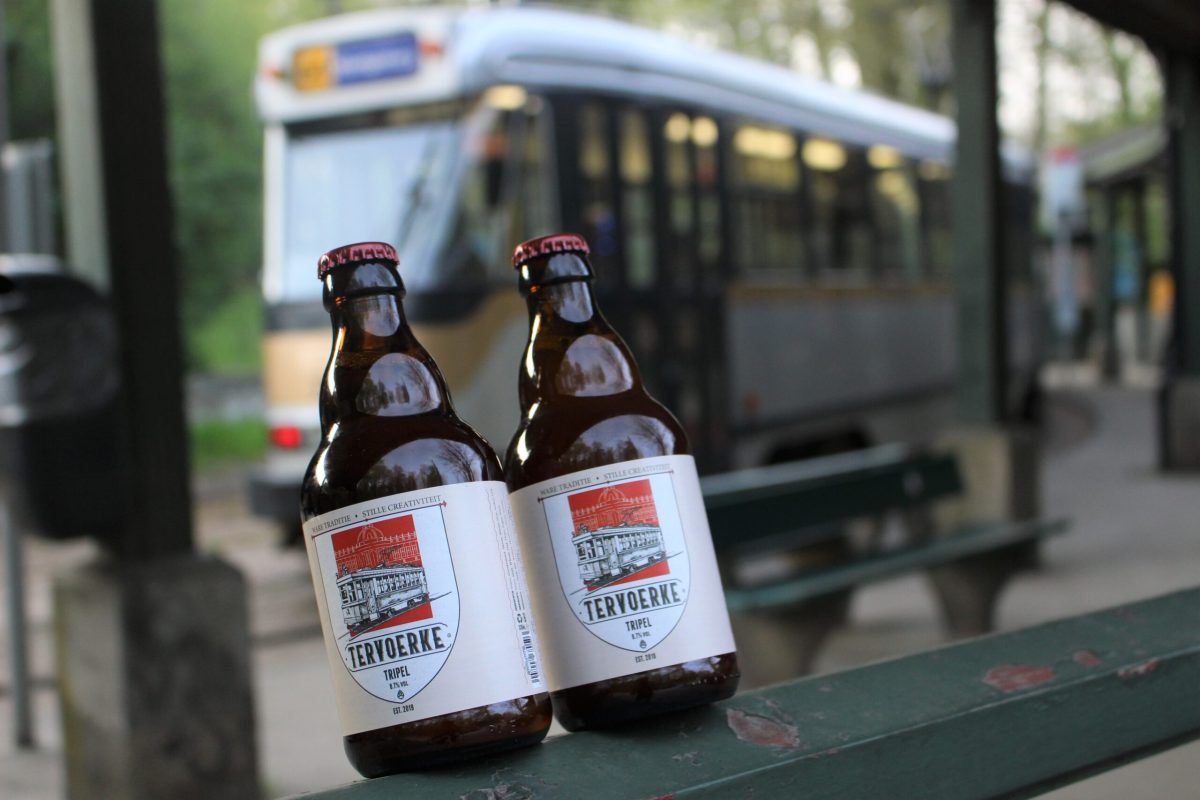
"People from here want to identify themselves with products from here," Tips explains. He's convinced that without this deeply rooted local identity, the brand's early success would have been far more difficult to achieve. Tervuren's character as a destination made that connection credible.
The unglamorous work of getting bars to say yes
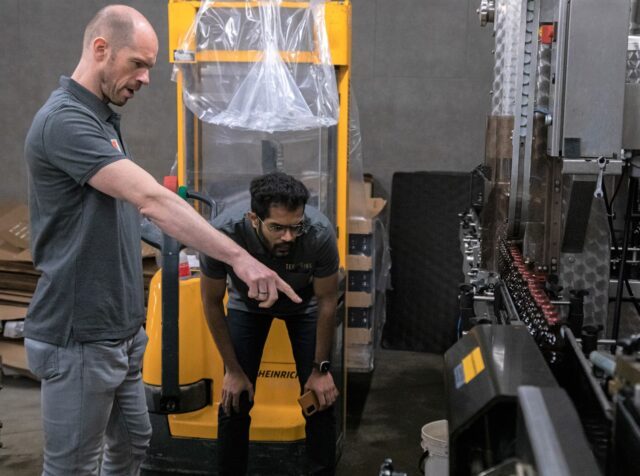
Tervoerke doesn't own a brewery. Instead, Tips and Bobbili develop recipes at small scale, then partner with Brouwerij Craywinckelhof in Lubbeek near Leuven for production. The crucial part is that Tervoerke maintains full control over the recipe and closely oversees the brewing process. This isn't about slapping a label on someone else's beer.
Getting the finished product into venues required work that took Tips far outside his comfort zone. He describes himself as an engineer and product developer, not a natural salesman. Yet building a brand meant personal pitches to café owners and retailers, relationship-building that felt awkward at first. "It required a lot of effort, which is out of my comfort zone," he admits. But something unexpected happened through this process. "By doing it, I felt that I kind of like the social aspect," he says, referring to connections built with bar and shop owners.
An early breakthrough came when Carrefour in Tervuren agreed to stock the beer following a Covid-era online pitch. Local retailers and the Streekproducten Vlaams-Brabant network expanded distribution further. Today you can find Tervoerke across Tervuren and surrounding areas, with select locations toward Leuven and parts of the Brussels periphery. Tips has deliberately avoided treating expansion as the main objective, keeping the operation rooted in its origins.
From one beer to three
The original Tripel remains closest to Tips' heart. "It's the first beer. It's like the baby," he says. But it no longer stands alone. In June 2023, Tervoerke introduced an IPA, a hazy, juicy 5.7% take designed to be approachable rather than aggressively bitter. The development process took roughly a year and followed the same philosophy of obsessive experimentation. Sales of the Tripel and IPA are now roughly evenly split, something that surprised Tips. While the Tripel remains the flagship, he personally drinks more of the IPA these days.
The third creation, a Grand Cru, pushed the brand into barrel-aging territory. Tervoerke took its Tripel and placed it in bourbon barrels imported from the United States, adding another dimension to what two engineers experimenting on a terrace had started. What began as a local curiosity has quietly become a small but significant part of Tervuren's identity, proof that the best beer stories aren't always about production volume or distribution reach. Sometimes they're about place, persistence, and two people willing to spend years perfecting something they believed in from the beginning.