When you mention La Défense to Parisians, you get blank stares. When you mention it to tourists, you get pity. "Have fun in the office park," they say, as if you've booked a vacation in an airport terminal. The truth is far stranger.
Most visitors to Paris fixate on the same checklist: the Eiffel Tower, Haussmann buildings with wrought-iron balconies, café culture, the Arc de Triomphe. La Défense sits just 8 kilometers west of the city center, a fifteen-minute RER ride away, yet it exists in a completely different Paris. Skyscrapers where no skyscrapers should be. Glass and steel rising from what was once farmland and shanties. A monument to a battle lost in 1870, now surrounded by the headquarters of global corporations.
The district's origin story is pure French drama. After the Franco-Prussian War in 1870-71, sculptor Louis-Ernest Barrias created a statue called "La Défense de Paris" to commemorate the city's resistance. It depicts a woman in a National Guard uniform, sword raised, leaning against a cannon, with a wounded soldier at her feet and a suffering child behind her. The monument stood nearly alone in this industrial wasteland for decades, growing more forgotten by the year.
Then Charles de Gaulle looked at post-war France and saw humiliation. Occupied. Destroyed. He needed to prove the country could rebuild, could compete on the world stage again. Inspired by American business districts, he decided Paris needed one too. In 1958, the state created EPAD, a planning body tasked with clearing the neighborhood and building something monumental. Over the next thirteen years, they relocated 25,000 residents from the area, expropriating roughly 9,250 housing units. It was urban transformation at a scale that would never happen in a democratic country today.
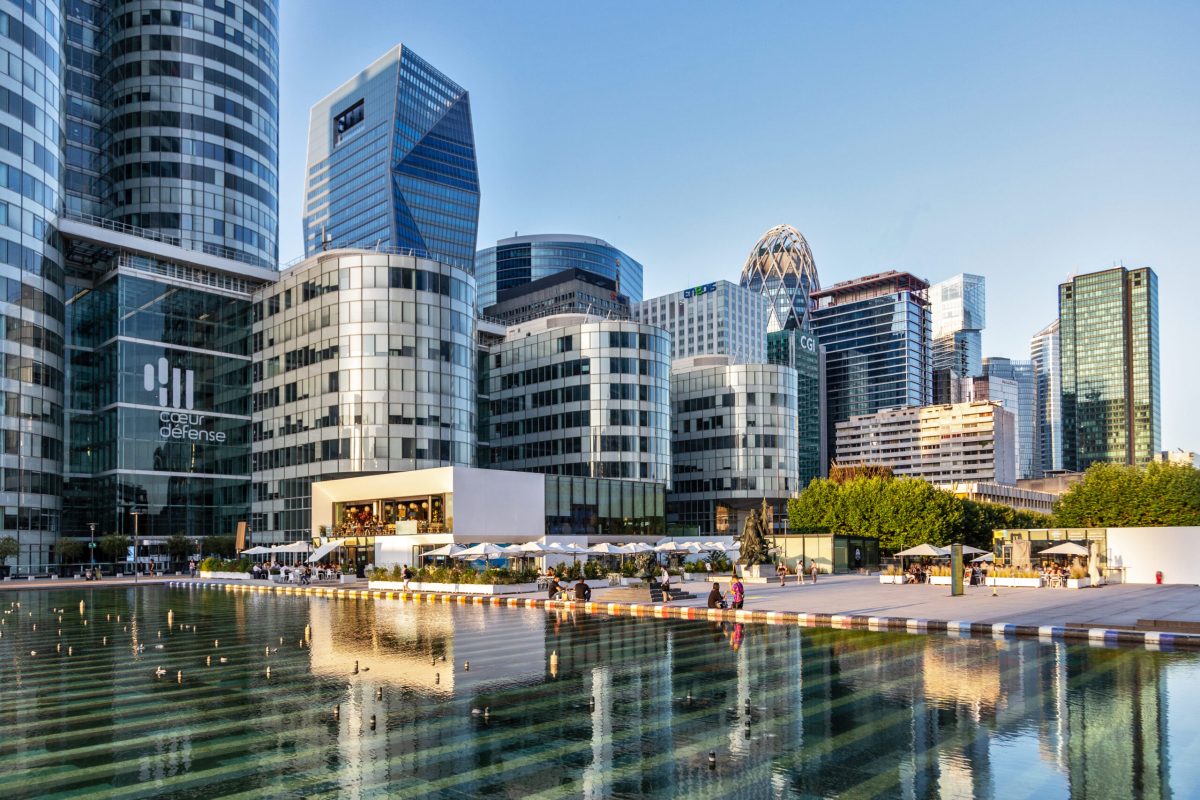
What emerged between 1958 and 1989 was almost two centuries of French history compressed into glass and concrete. The CNIT, a massive triangular concrete shell completed in 1958, marked the beginning. Then came a forest of towers, each with its own architectural language. The Link, at 242 meters, recently became France's tallest building. Hekla erupts from the plaza like a volcanic shard. Tour Total stacks polygonal volumes like organ pipes, catching light that shifts throughout the day.
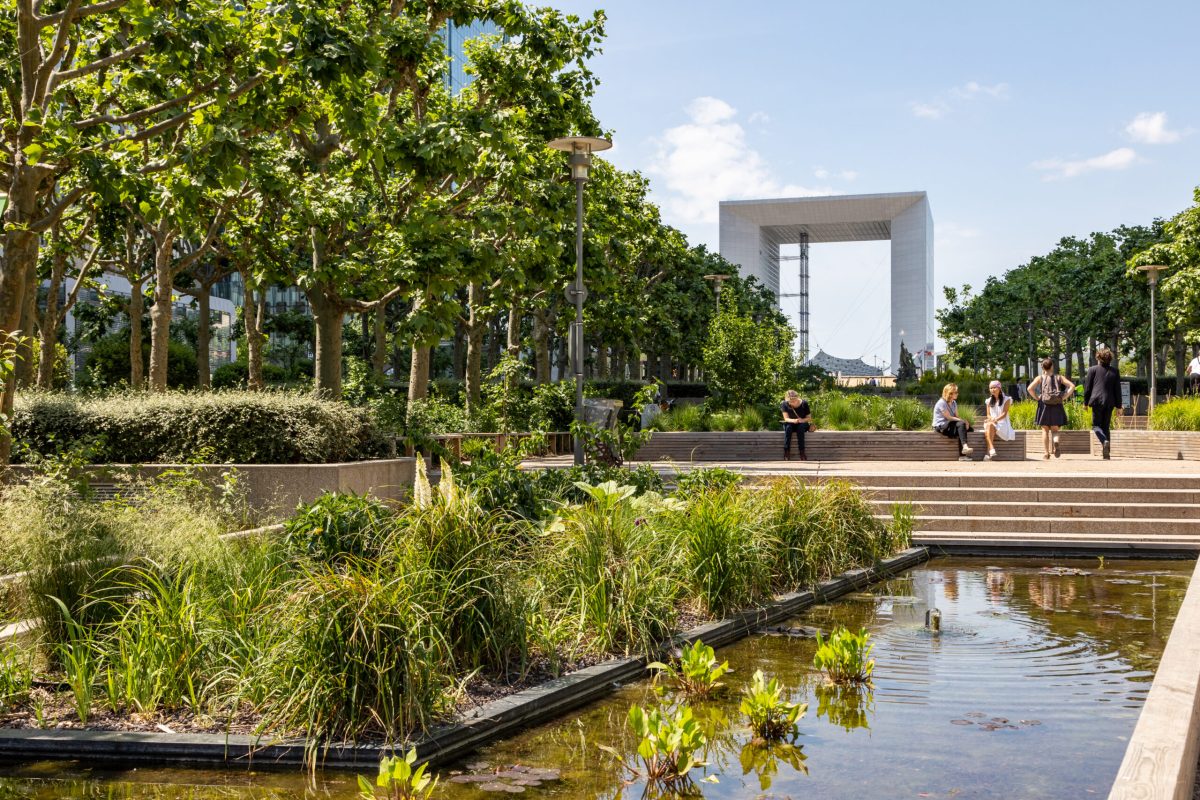
But the masterstroke came at the end. In 1989, architect Johann Otto von Spreckelsen completed the Grande Arche, a perfect cubic monument aligned directly with the Arc de Triomphe in the opposite direction. Where Napoleon celebrated military victory in 1806, Spreckelsen placed a monument to humanity itself. Between those two arches lies 183 years and an entire nation's reckoning with itself.
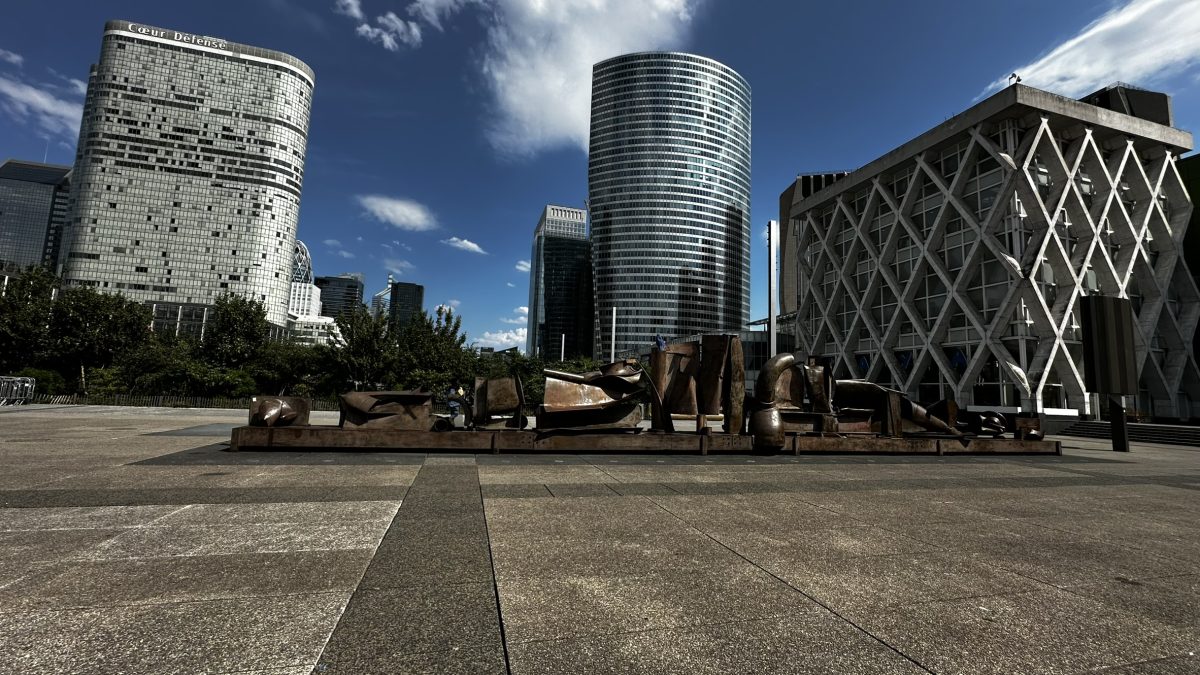
Today, 180,000 people flood into La Défense daily to fill those towers. Only 20,000 actually live there. The district ranks as Europe's top business destination, second globally only to two New York neighborhoods and one in Tokyo. Roughly 40 percent of companies are French; the rest are foreign multinationals. By the numbers, de Gaulle won his victory.
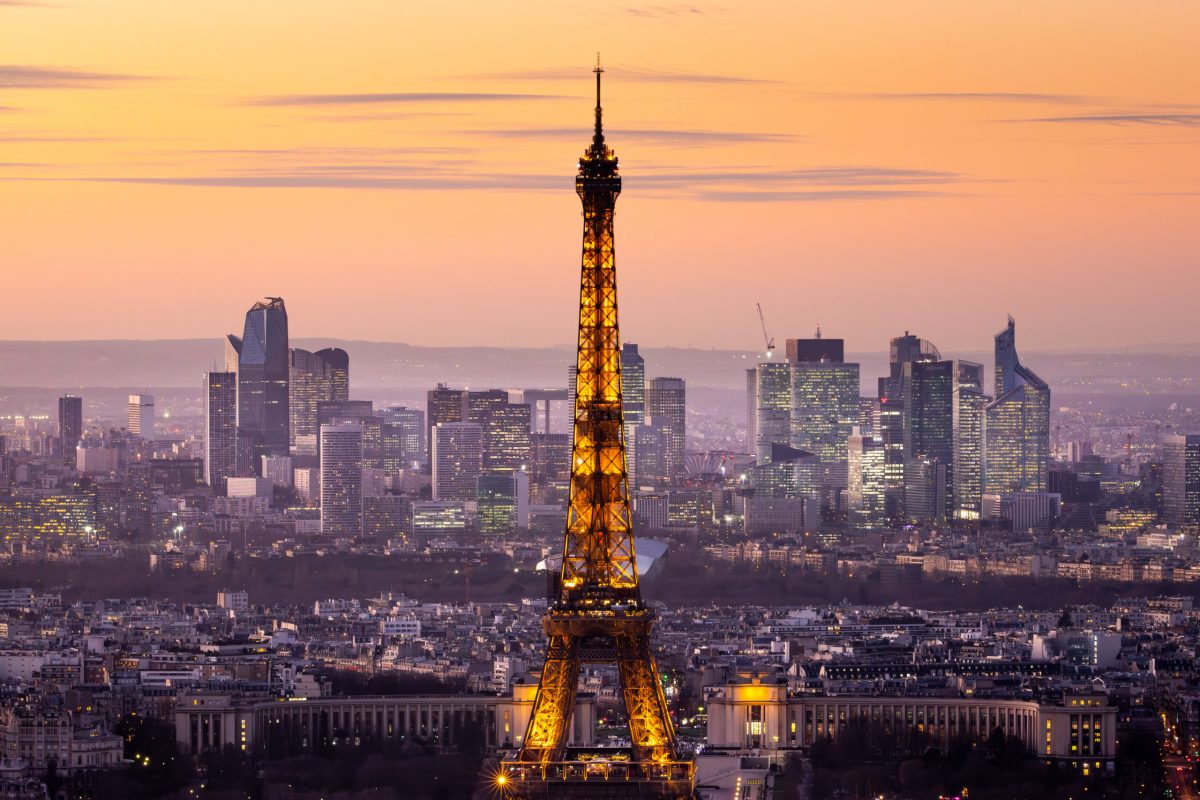
But here's what changes your experience of the place: climb to the rooftop bar of the Meliá hotel and look out across Paris. You'll see the Eiffel Tower rising above the trees. The Arc de Triomphe in the distance. Gehry's Fondation Louis Vuitton glinting in the sun. The Bois de Boulogne spreading green below. On clear days, Sacré-Cœur and Montmartre shimmer on the horizon. Paris from up there reveals itself as remarkably green, almost suburban in its breathing room. This is the view tourists come to the city to find, and they never think to look from here.
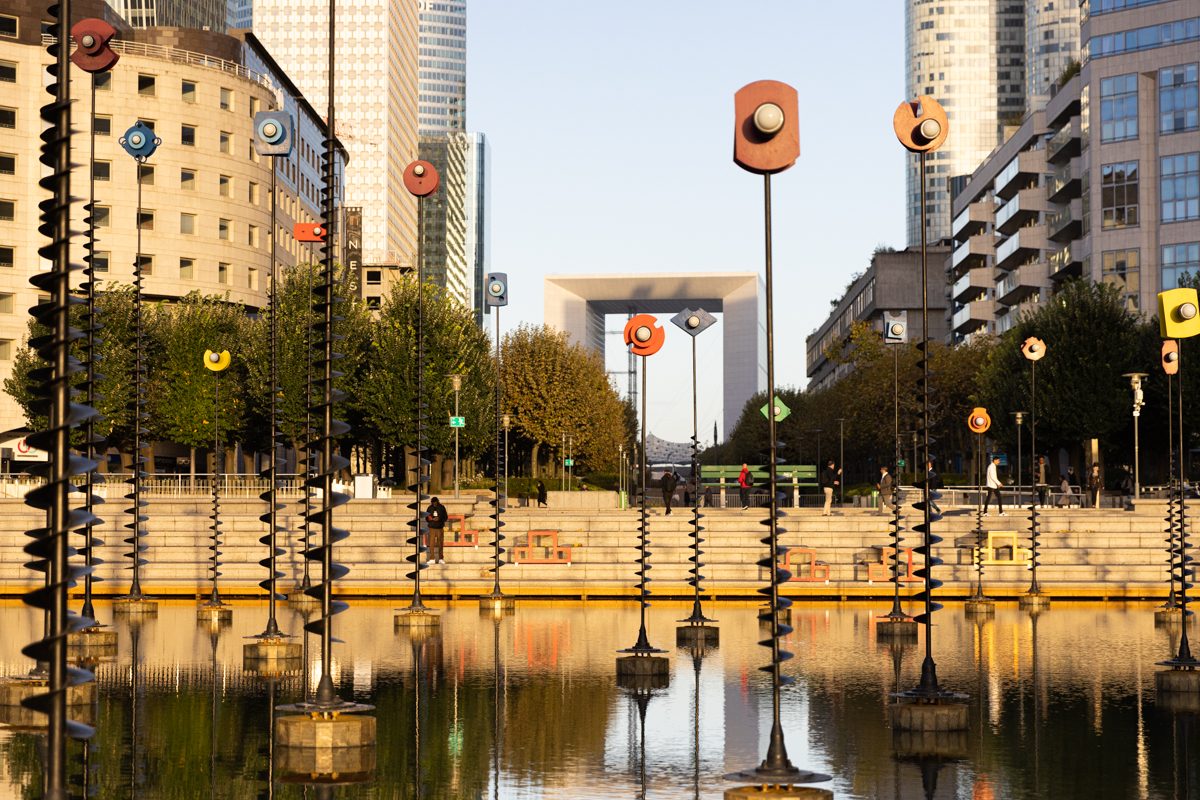
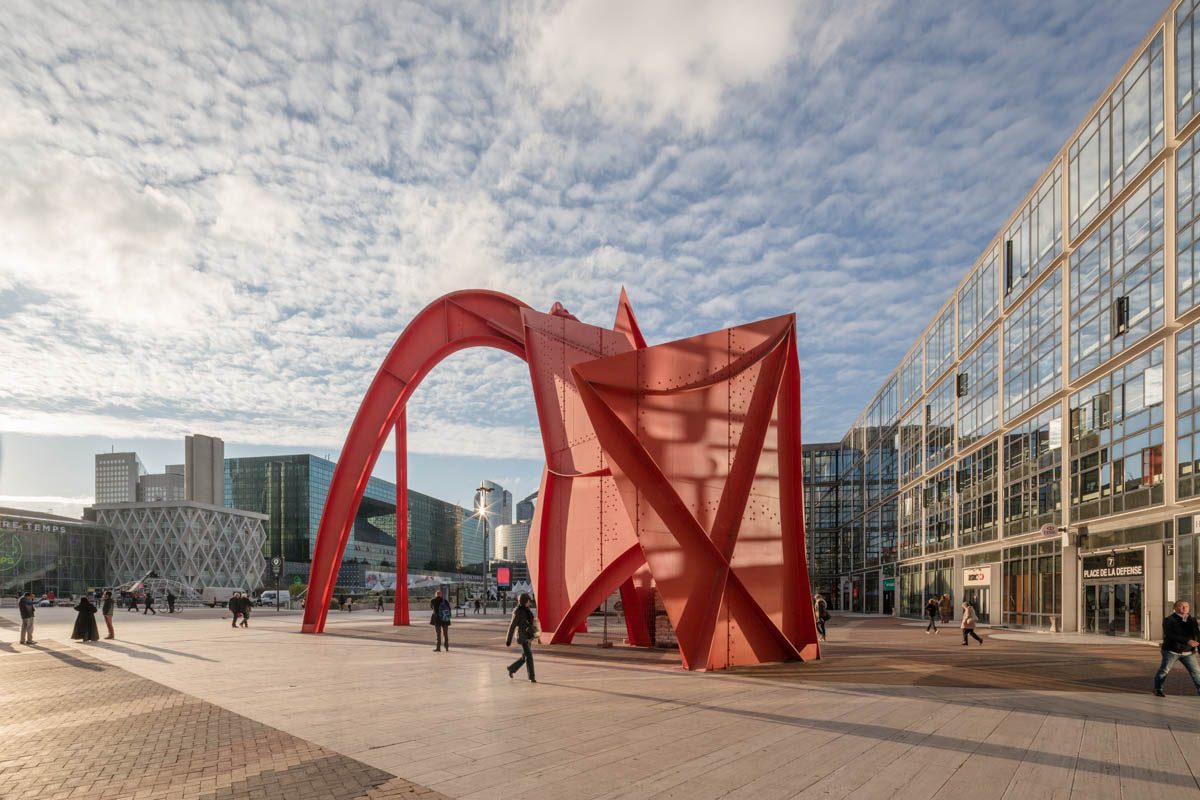
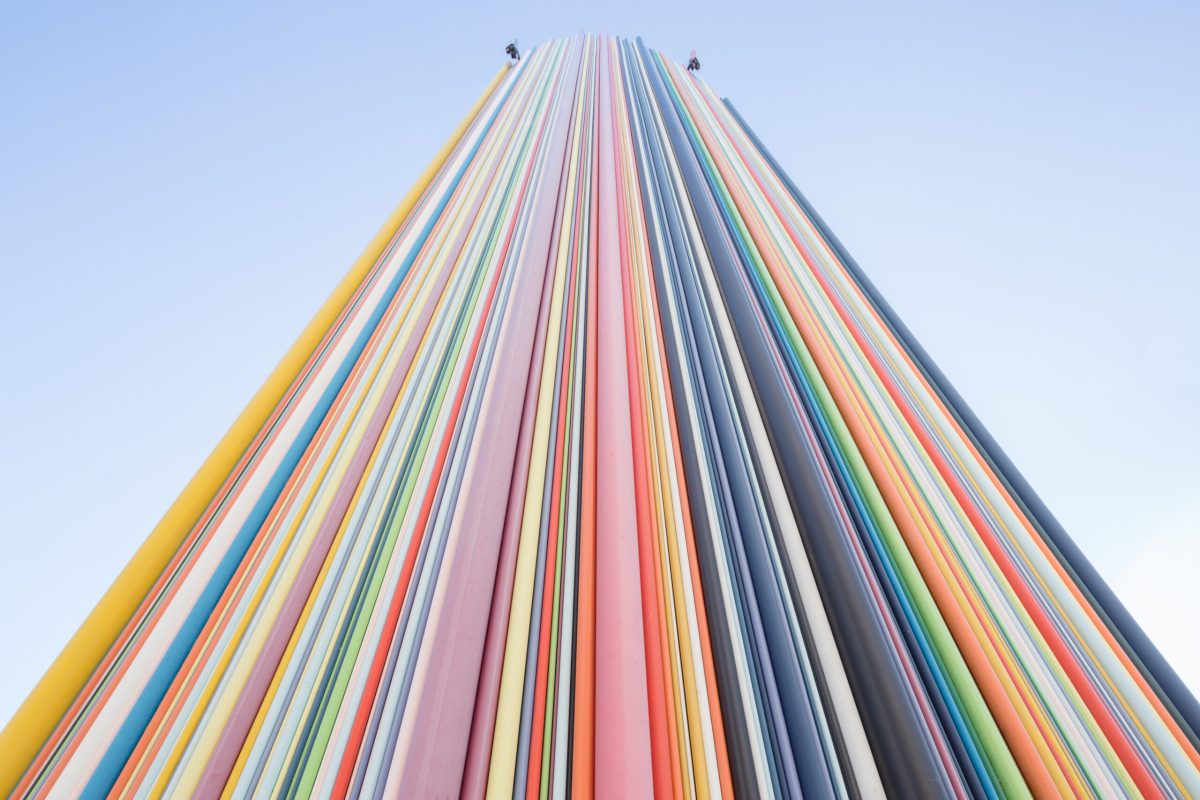
Paris is also investing heavily in making La Défense something beyond a place where people sign contracts. Seventy major artworks now dot the esplanade. Agam's fountain catches the light. Alexander Calder's Spider crouches in the plaza. Raymond Moretti's "Chimney" stands 32 meters tall, a ventilation shaft wrapped in colored fiberglass tubes that looks like a giant Paul Smith store made three-dimensional. The benches are art. The pathways are designed. Someone decided an office district deserved beauty.
Most trips to Paris follow predictable routes. Walk along the Seine. See the Louvre. Sit at café tables and feel quietly superior. La Défense is different. It's where you glimpse France's ambitions, its scars, its refusal to accept defeat. It's where a nation that lost a war built a monument to trying anyway, and then surrounded it with hope.