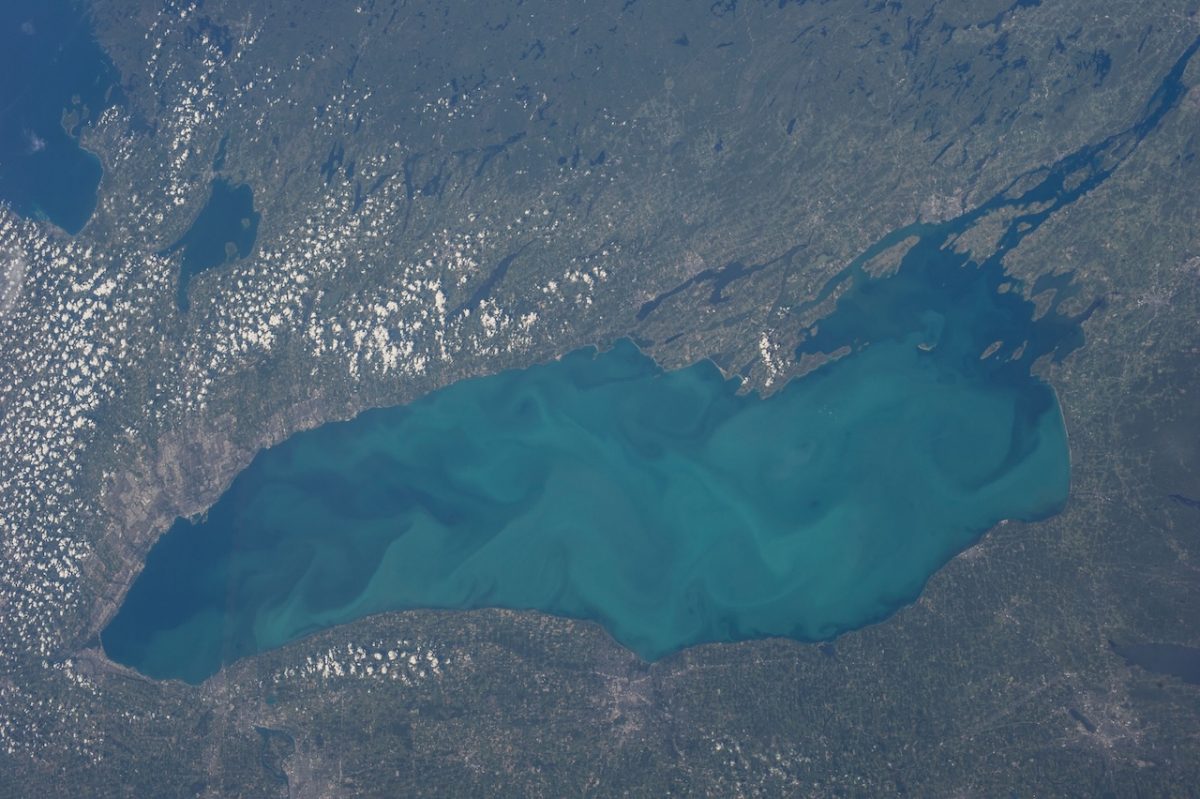
If you open Google Maps from the United States and search for Lake Ontario, you'll now see something different than your friends in Canada see. The smallest of the five Great Lakes has been officially renamed "Lake America" for US users, following an executive order from President Trump. Meanwhile, Canadians pull up the same body of water and still see "Lake Ontario." Users outside both countries get treated to both names at once, a digital compromise that barely masks an escalating geographic power play.
Google made this shift after the US Geographic Names Information System (GNIS), the federal database that serves as Google Maps' source for American place names, formally adopted the new designation. The tech giant was following its own policy: when international geographic features have officially different names in different countries, Google shows users whichever name their government recognizes. It's a sensible system, except when governments start fighting over what counts as official.
The renaming itself stems from Trump's argument that the United States is the "greatest protector of the Great Lakes," pointing to American investments in environmental protection, Coast Guard icebreaking operations, and the lake's historical weight in US trade and defense. The executive order emphasizes that the deepest portions of Lake Ontario sit within American territory, meaning the US claims the majority of the lake's water volume. The logic feels thin to most people familiar with shared international boundaries, but the administration presented it as a matter of economic recognition.
Ontario Premier Doug Ford decided theatrics were warranted. He unveiled a massive sign on the Canadian shoreline that reads "Lake Ontario. Now and Always," then delivered a statement that dripped with defiance. "Long before President Trump, this lake was called Lake Ontario. Long after President Trump is gone, it will still be called Lake Ontario," Ford said. Canadian Prime Minister Mark Carney went deeper into the historical record, noting that the name dates back over 400 years and predates both Canadian Confederation and the US Declaration of Independence. He also shared the name's actual origin: it comes from the Wendat word "Ontari'io," which means "the lake is beautiful, the lake is big."
When Maps Become Weapons
This isn't Google's first rodeo with politically charged geography. The platform faced an identical situation when Trump ordered the Gulf of Mexico renamed as the "Gulf of America" in 2025, and Google Maps responded the same way, showing different names to users depending on their location. Mexico rejected the designation just as Canada has rejected this one, with the same basic argument: no single nation can unilaterally rename an international body of water shared with others.
What makes the Lake Ontario dispute particularly absurd is that it sits at the intersection of already-fraught US-Canadian trade relations. The renaming announcement comes amid collapsed trade negotiations, with the US imposing 50 percent tariffs on 20 billion dollars worth of Canadian goods. Canada has countered with plans for equivalent retaliatory tariffs. Trump denies the lake rename was meant as a pointed message to Canada, yet he's simultaneously accused the country of "ripping us off for a long time on trade."
Trump has even escalated the silliness, sharing AI-generated videos on social media that depict him knocking down a Lake Ontario sign and replacing it with one that says "Welcome to Lake America." In another video, Canada geese are digitally altered to wear his distinctive hairstyle and carry rifles along the shoreline. It's the kind of content that suggests someone in the administration has fully committed to the bit.
Not Everyone in America Is Playing Along
The renaming has split American politicians along predictable lines. New York Governor Kathy Hochul, whose state is the only American state bordering the lake, has announced that New York will continue calling it Lake Ontario. Michigan Representative Debbie Dingell has introduced legislation to reverse Trump's executive order, calling it "idiotic" and emphasizing that the Great Lakes are a shared resource that generations of Canadians and Americans have worked together to protect. For her, this isn't about geography, it's about fundamentally undermining cooperative environmental stewardship.
Trump, meanwhile, seems to be warming up for more geographic rebranding. He told reporters that America now has "a gulf and a lake," and suggested the next targets might be the Atlantic or Pacific oceans. Whether this is actual policy direction or just provocative showmanship remains unclear, but the fact that it's even being said out loud reveals how little traditional norms seem to matter anymore.
The core problem is that no international authority exists to definitively settle disputes over the names of shared waters. This means the Lake Ontario controversy will likely persist indefinitely, with different countries, governments, and mapping services continuing to use whichever name suits their interests. For travelers crossing the border, it's a reminder that geography isn't purely physical anymore. It's political, it's personal, and now it's also algorithmically sorted by your IP address.