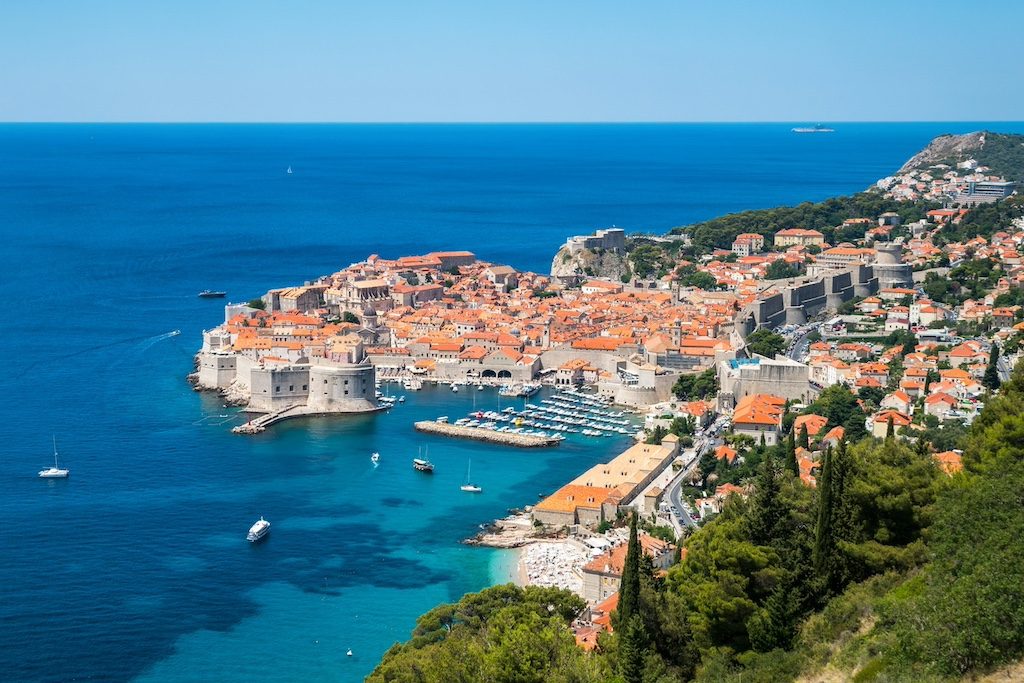
Imagine waking up to find your medieval home surrounded by 12,000 day-trippers who'll be gone by sunset. For years, that was Dubrovnik's reality. Cruise ships would dock in waves, disgorging tourists onto cobbled streets built for horse carts, not rolling luggage. The UNESCO World Heritage city was drowning in its own success, and by 2017, the pressure was so intense it risked losing its protected status entirely.
That's when Mayor Mato Franković and his team stopped trying to turn people away and started asking a different question: what if we spread them out instead? The answer became the "Respect the City" initiative, which has now spent nearly a decade proving that overtourism doesn't require an outright ban. It just requires boundaries, strategy, and a commitment to something larger than quarterly revenue numbers.
The Problem That Almost Broke a City
Dubrovnik's explosion happened fast. The combination of its ancient stone walls, UNESCO listing, and starring role in Game of Thrones created a perfect storm of tourism. "For years, tourism in Dubrovnik wasn't managed," Franković explained. "It simply just happened on its own." On peak days, five or six massive cruise ships would arrive simultaneously, each depositing thousands of people into an Old Town whose narrow streets hadn't changed since the 15th century. The result felt less like cultural exchange and more like controlled chaos.
These weren't tourists planning multi-day itineraries or spending money in local restaurants. They were cruise passengers with six hours to grab a postcard and take a selfie on the walls. The footfall concentrated entirely on the most photogenic spots, creating bottlenecks that stressed residents and infrastructure alike. When overtourism threatened to strip the city of its UNESCO status, the city's leadership realized something had to change.
Strategy Over Restriction
Rather than implement a heavy-handed visitor cap that would alienate the tourism industry, Franković's team took a softer approach: distribution. The "Respect the City" scheme focuses on spreading arrivals evenly across days, weeks, and months so that no single neighborhood experiences the full crush at once. Currently, the city welcomes around 650,000 arrivals and two million overnight stays between January and mid-July, but they come at a rhythm the city can actually absorb.
The mechanics are elegant in their simplicity. Cruise operators can dock no more than two ships at once, capped at 4,000 arrivals per visit. More importantly, each vessel must stay for at least eight hours, which pushes tourists beyond the Old Town walls and into neighborhoods that actually need the foot traffic and spending. A longer port call means someone grabs dinner in the Lapad district instead of bolting back to the ship. Money stays local instead of going to ship operators.
Coach operators face similar logic. A web-based booking system requires buses to register in advance, allowing the city to parcel out arrival slots throughout the day. It's permission-based rather than punitive, and it gives officials the data they need to adjust capacity based on what else is happening that week. If a major festival or holiday is coming, they can tighten the numbers.
Respect as a Core Message
The initiative's name points to something just as important as logistics. "Respect for Dubrovnik is something we ask of everyone," Franković said. "Citizens, people working in the city, those who come to enjoy Dubrovnik. This is our message to everyone." It's a cultural shift disguised as policy.
Some rules address obvious friction points. Tourists are banned from wheeling suitcases over the uneven cobblestones of the Old Town, reducing the constant rumble of luggage that residents had grown to resent. Outdoor venues face a noise cap of 55 decibels, protecting the quiet that makes these streets special in the first place. Other destinations struggling with similar problems have watched Dubrovnik's playbook closely. Like Varenna in Italy, other European towns are experimenting with their own rules to combat overtourism.
The Next Battle
Having stabilized the cruise ship situation, Franković is now focused on a deeper threat: short-term rental platforms that are quietly converting residential neighborhoods into ghost zones. "Short-term rentals are killing cities," he told Euronews bluntly. "Step by step, they push residents out and turn living neighbourhoods into tourist apartment zones. It becomes like a generic Disneyland, and who wants to visit a ghost town?" The plan involves concentrating tourism in proven hotspots while replacing underdeveloped zones with affordable housing for locals who can no longer afford to stay.
It's a reminder that managing overtourism is never finished business. Every solution creates new pressures elsewhere. But what Dubrovnik has proven is that cities don't have to choose between prosperity and preservation. The goal is straightforward: keep the tourists coming, keep the locals living, and keep the magic intact. So far, the math is adding up.


