Verona's most famous story involves star-crossed lovers and a balcony. Its newest attraction involves nuclear weapons and a 13,000-square-metre underground bunker that most visitors had no idea existed.
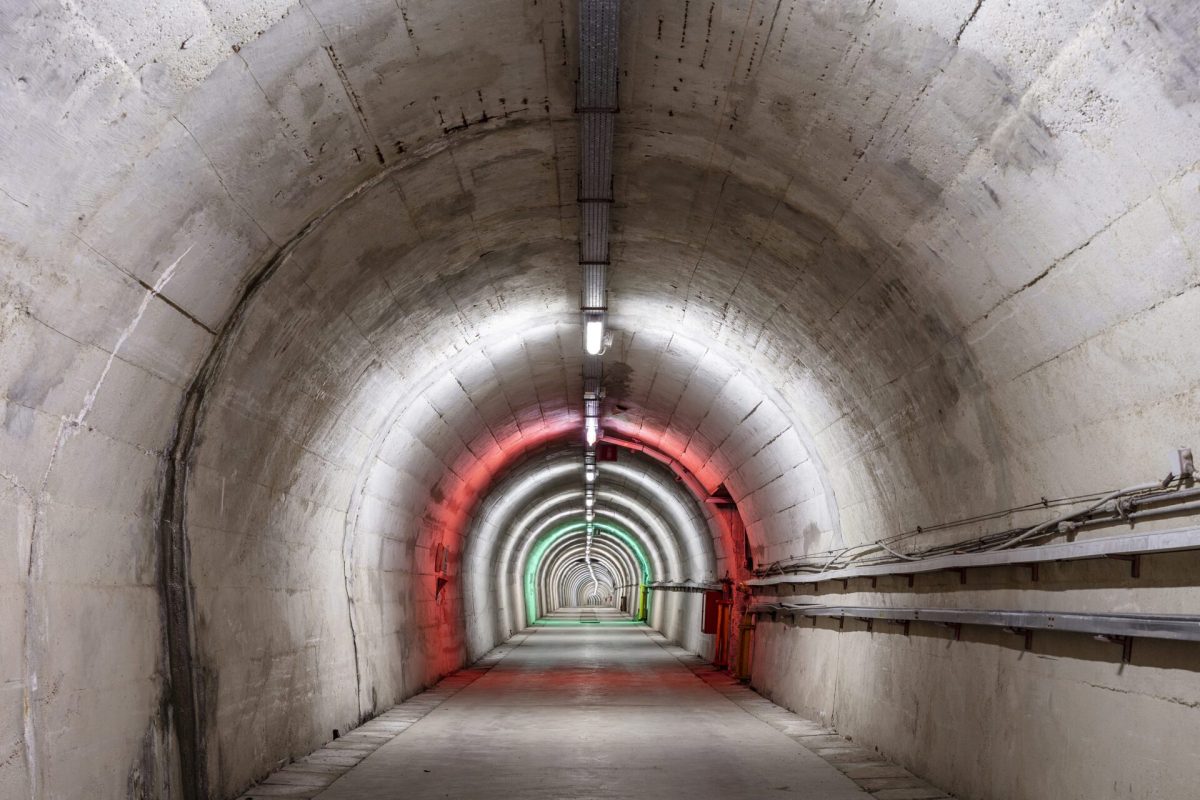
Tucked beneath the hills near Lake Garda, just outside the city, sits West Star. The name itself is a Cold War riddle, a nod to the Soviet Union's red star. Built between 1960 and 1966 at the height of geopolitical tension, this fortress was designed to be the nerve centre of NATO operations across southern Europe. A kilometre-long network of tunnels connects 100 rooms that once housed 300 military personnel. The bunker had everything needed to survive a month underground: kitchens, water tanks, filtration systems, an infirmary, a gym, even a bar. The war room and communications centre still sit waiting to tell their story, alongside a mechanics' workshop where Cold War soldiers left behind some rather cheeky decorations that will remain untouched for visitors to discover.
For four decades, West Star hummed with activity as a command centre coordinating military exercises and real operations. Then the Cold War ended. The bunker was decommissioned in 2007, and by 2018, Italy's Ministry of Defence handed it over to the municipality of Affi. What happened next was the kind of cultural project that takes patience and vision. Researchers from the University of Florence began mapping the site in 2022, interviewing former employees and digitising technical blueprints. Now, Italy's parliament has green-lit 7 million euros to transform this relic into a museum, with parts expected to open as early as next summer.
This isn't just another military museum collecting dusty uniforms and faded photographs. West Star tells the story of breakthrough technology. The 1960s and 70s computers on display include some of Europe's earliest ARPANET systems, the precursor to the internet. The bunker's engineers created ingenious survival systems: massive electricity generators, evaporation towers that recycled humidity into fresh water. The original maps on display are particularly striking because, as architect Michelangelo Pivetta from the University of Florence points out, nobody makes them like that anymore. They map a world that no longer exists.
What Visitors Will Actually See
When the museum fully opens by 2029, about 70 to 80 percent of the complex will be accessible to the public. You'll walk through the original war room where officers tracked military movements across the continent. You'll see the canteen where staff ate their meals, the infirmary where they received medical care, the kitchen that fed hundreds. Every corner offers a window into how people lived while preparing for a war that, thankfully, never came.
The site is expected to eventually draw around 100,000 visitors annually. For a region best known for dreamy lakeside towns and wine routes, adding a Cold War museum feels almost absurdly fitting. You could spend the morning hiking around Lake Garda, the afternoon touring Valpolicella vineyards, and the evening descending into the tunnels where NATO once coordinated European defence.
Why This Matters Now
Michelangelo Pivetta told The Art Newspaper that the museum offers "an opportunity to start speaking again about the Cold War in a historical sense." That timing feels significant. As geopolitical tensions resurface across Europe, West Star becomes more than just a quirky underground attraction. It's a teaching tool about a decade-long standoff that shaped modern Europe, told through concrete tunnels and vintage technology rather than textbook pages.
West Star joins a small constellation of Cold War museums across Italy. The Bunker Museum in Dobbiaco, which opened in 2023, preserves part of a network of fortifications built between 1951 and 1993 to counter a potential Soviet invasion. Like other Cold War heritage sites emerging across Europe, these spaces challenge visitors to think about what daily life looked like when the threat of annihilation felt immediate and real.
Mayor Marco Sega of Affi called the funding approval a historic moment for the community, and he's right. These underground bunkers don't reopen every day. West Star has been sealed for years, waiting. Soon, curious travellers will finally get to experience what it felt like to work in the heart of Cold War Europe, all while staying just minutes away from the world's most romantic balcony.