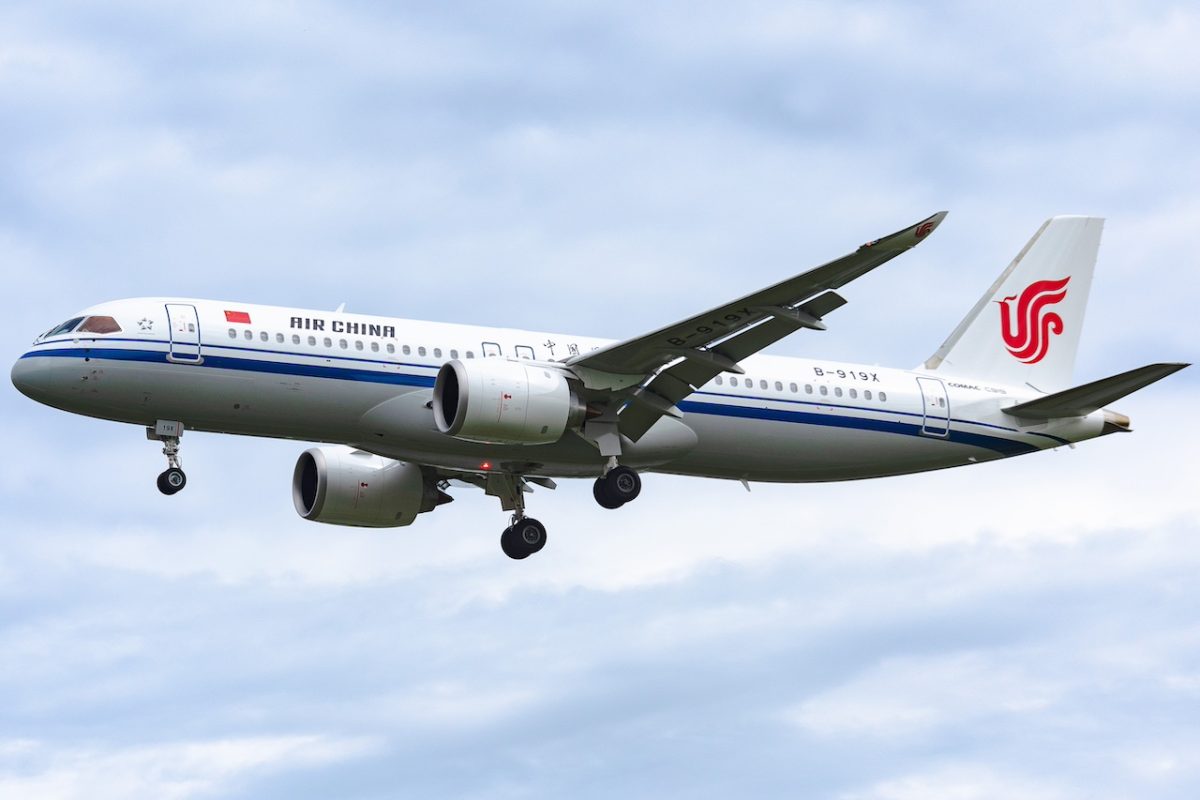
Beijing's three-decade dream of building a world-class commercial aircraft just shifted into high gear. On August 12, Air China will launch daily service between Beijing and Ulaanbaatar using the C919, a narrowbody jet that represents China's most serious bid yet to muscle into aviation's two-player game dominated by Airbus and Boeing.
This route matters because it's not just another domestic flight. While the C919 has been operating between Shanghai and Hong Kong, and between Beijing and Hong Kong since earlier this year, those count as regional operations (Hong Kong is technically a Special Administrative Region). The Ulaanbaatar service crosses an actual international border, making it the aircraft's first true cross-border scheduled route. For COMAC, the state-owned manufacturer behind the project, this is vindication after decades of false starts.
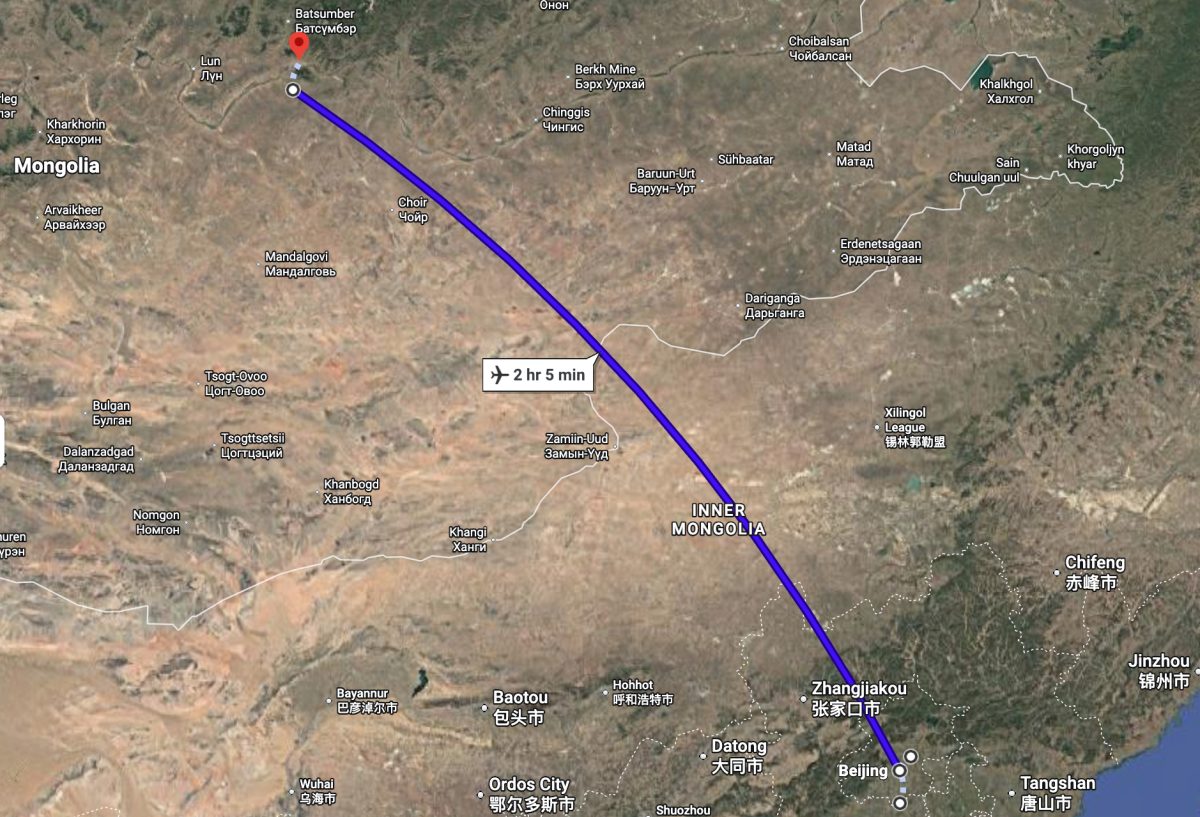
How the flights actually work
Flight CA723 departs Beijing Capital at 3:00 pm and touches down in Ulaanbaatar just over two hours later at 5:15 pm. The return flight CA724 leaves Mongolia at 6:30 pm and lands back in Beijing at 8:35 pm. The 158-seat cabin splits into eight business-class seats and 150 economy spots, replacing a Boeing 737 MAX 8 that currently handles the route. At roughly 1,166 kilometers, this hop sits comfortably within the C919's sweet spot as a short- to medium-haul workhorse.
Travelers will notice nothing unusual about the experience. That's exactly the point. The C919 is designed to fit seamlessly into existing airline networks, perform the same routes, and deliver comparable economics to its American and European rivals. Air China currently operates a fleet of 12 of these jets, making it one of three launch operators alongside China Eastern Airlines and China Southern Airlines.
Twenty years in the making
COMAC's journey to this moment reveals why the competition matters so much. Back in 1980, China built the Y-10, a four-engine passenger jet that never scaled up because the country lacked industrial depth. The company then partnered with McDonnell Douglas to assemble MD-82 and MD-90 aircraft, but Boeing's acquisition of McDonnell Douglas in the 1990s killed that arrangement. Other European partnerships fizzled too.
By the late 2000s, Beijing decided to do it themselves. The smaller ARJ21 regional jet rolled out in 2007 and served as a testing ground for COMAC's design, certification, and manufacturing muscles. The C919 project won approval as China aimed for the massive single-aisle market where Boeing and Airbus print money.
Rather than trying to manufacture every component in-house, COMAC adopted the "main manufacturer-supplier" model used across global aerospace. The company handles overall design and integration while sourcing major systems from specialist suppliers in China and beyond. Over 300,000 people from more than 1,000 companies and organizations helped build the thing. The prototype rolled out in 2015, made its maiden flight in May 2017, received type certification in September 2022, and entered service with China Eastern Airlines in May 2023.
The bigger game
What makes this Mongolia route significant reaches far beyond the two cities involved. It's a visible marker in Beijing's long-term strategy to build a commercially viable aircraft manufacturer that can actually compete globally. Even Airbus CEO Guillaume Faury acknowledged the stakes when he suggested COMAC could transform the market from a duopoly into a "potential triopoly." He called the Chinese manufacturer the most credible newcomer the aerospace industry has seen in years.
The geopolitical dimension is real too. Chinese carriers have ordered nearly 100 new planes worth $16 billion, and more orders will likely follow as COMAC expands its route network and proves reliability on longer missions. For travelers, this competition could eventually mean more aircraft choices, better pricing, and faster innovation across the industry.
Mongolia might seem like a quiet debut for international operations, but it checks every box COMAC needed to tick. The route is short enough to showcase the jet's efficiency, connects two capital cities where the airline already operates, and requires minimal logistical complexity. It's the definition of a strategic first step.
Watch for more international routes to follow. COMAC will keep pushing the C919 into markets across Asia before eventually targeting longer routes and more competitive sectors. For now, passengers on Flight CA723 who didn't pay close attention to the tail fin might not even realize they're flying China's flag-bearing commercial jet. That invisibility is exactly how you know it's working.